There is a special kind of pressure that comes with stepping onto the mat at an international championship. Across from you stands an opponent who has spent years preparing for the same opportunity. Beyond the competition area, coaches and teammates watch closely, knowing that months of training can come down to a single exchange.
For Canadian Sambo athlete Torin MacFadyen, those moments are familiar territory.
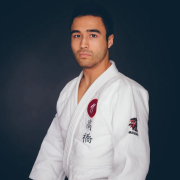
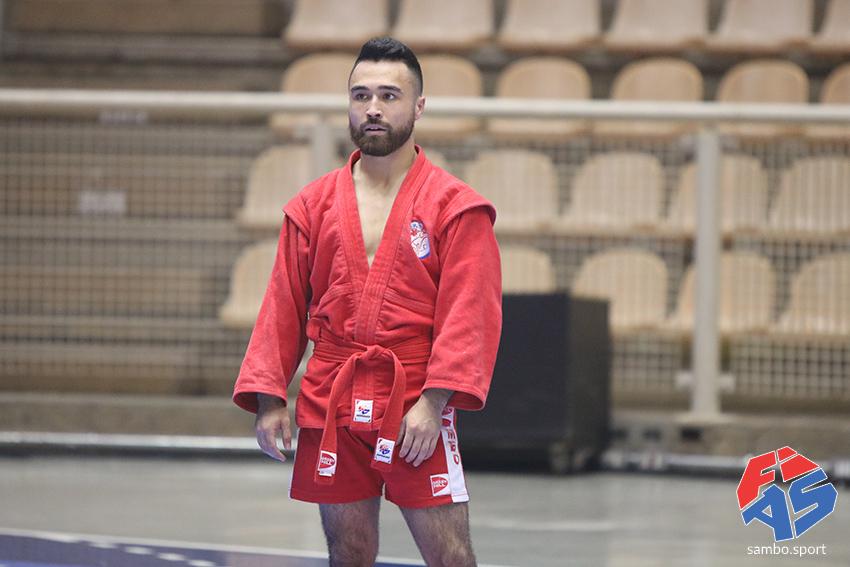
Representing Canada and carrying forward the distinguished martial arts legacy of the Takahashi-MacFadyen family, Torin has developed into an accomplished international competitor in both Sport Sambo and Combat Sambo. His career includes national titles, international medals, and victories across several grappling disciplines.
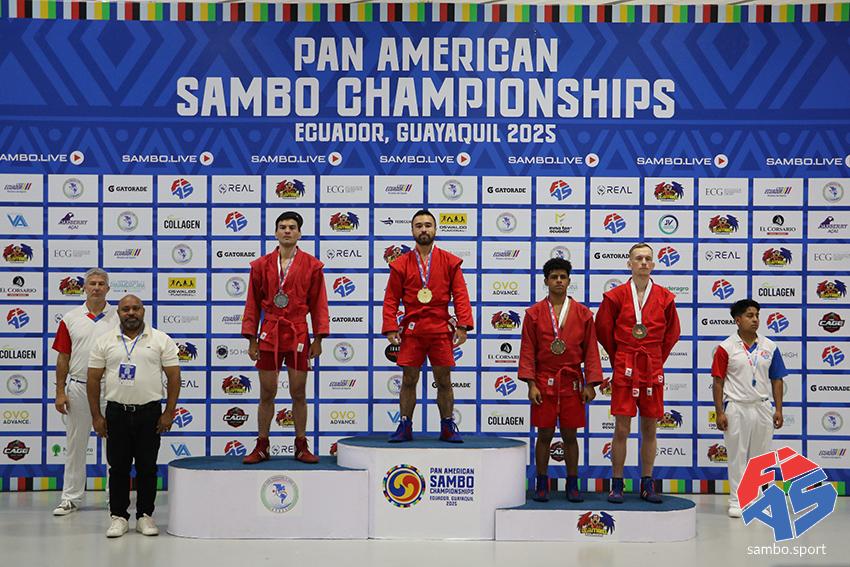
At the 2025 Pan American Sambo Championships in Guayaquil, Ecuador, Torin added another remarkable chapter to that story, capturing the gold medal in Combat Sambo and bronze in Sport Sambo in the men’s 58 kg division.
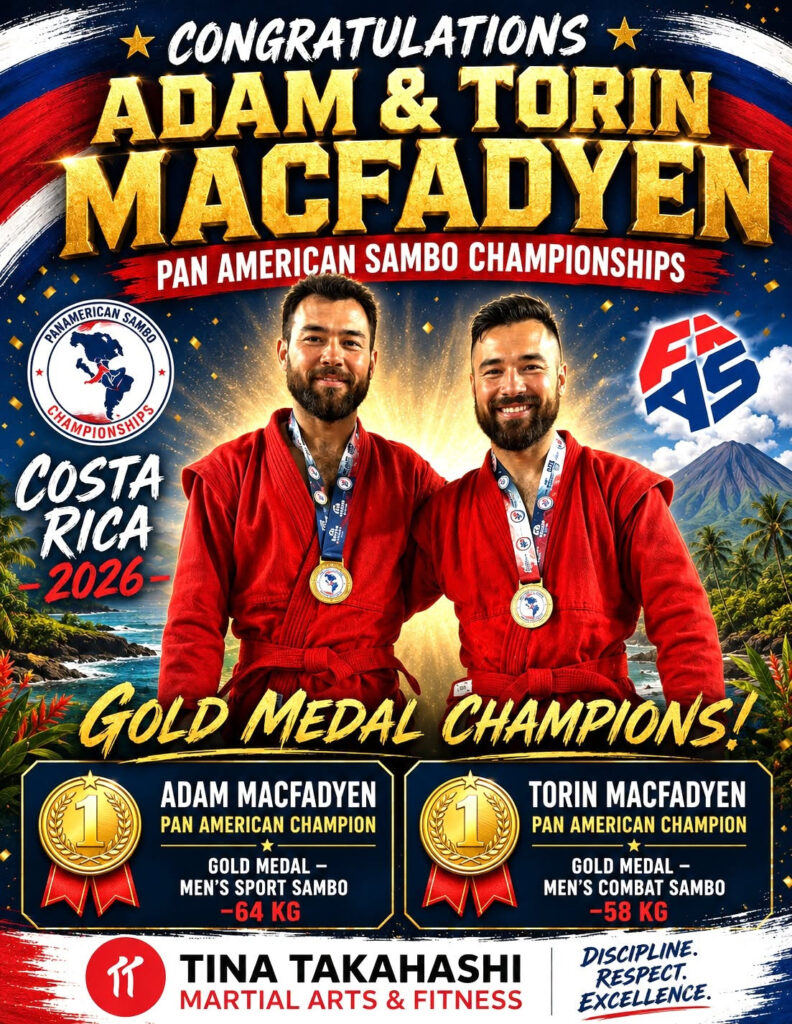
In 2026, Torin continued his winning streak, claiming another Pan American Combat Sambo gold medal in Costa Rica, while his brother Adam captured gold in Sport Sambo. Together, their victories made 2026 another exceptional year for the MacFadyen family and Canadian martial arts.
The achievement was more than a successful weekend of competition. It demonstrated the versatility, technical preparation, and competitive experience required to excel under two different sets of Sambo rules. For everyone at Tina Takahashi Martial Arts in Ottawa, it was another proud moment in a family tradition built on decades of dedication to martial arts.
Now, with the 2026 World Sambo Championships approaching in Tashkent, Uzbekistan, Torin is preparing to take that experience to an even more demanding international stage.
His journey offers a compelling look at what it takes to compete at the highest levels of Sambo—and why the lessons learned on the mat continue to shape generations of martial artists.
From June 27 to 29, 2025, Guayaquil hosted the Pan American Sambo Championships, bringing together athletes from across North, Central, and South America.
The event marked the first time Ecuador had hosted this major continental Sambo championship.
Organized by the Pan American Sambo Union with support from the Ecuadorian Sambo community, the competition featured Sport Sambo, Combat Sambo, and Beach Sambo.
For competitors, the Pan American Championships represent an opportunity to measure their skills against some of the strongest athletes in the Americas.
Different nations bring different wrestling traditions, tactical preferences, and training systems. Some competitors arrive with extensive Judo backgrounds. Others specialize in wrestling, submission grappling, or striking-based combat sports.
Success requires far more than familiarity with individual techniques. Athletes must adapt quickly, solve problems under pressure, and execute their game plans against unfamiliar opponents.
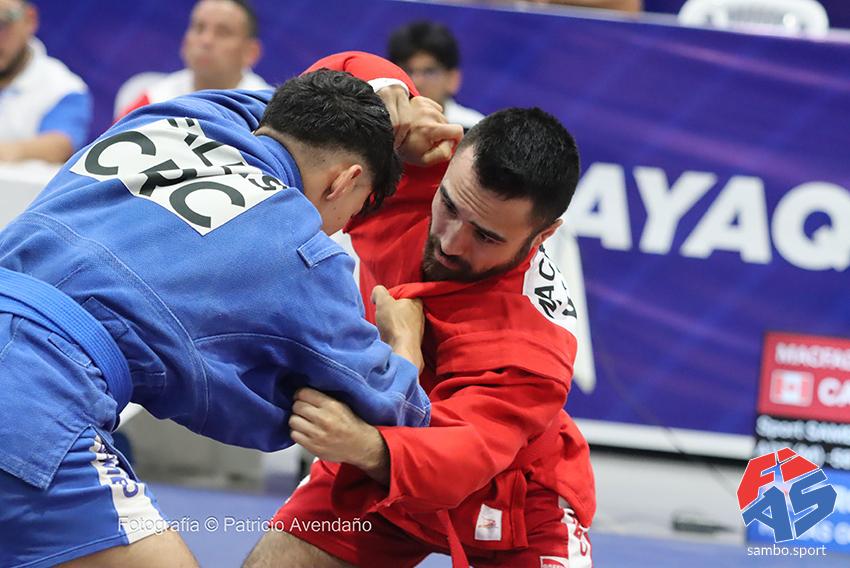
Torin competed in both Sport Sambo and Combat Sambo, ultimately earning medals in each discipline.
His official results were:
Both achievements are recorded in the official championship results published by the International Sambo Federation (FIAS).
Torin’s first podium finish came in Sport Sambo, where he earned bronze in the 58 kg division on June 27.
The category was won by Armando Villaseñor Román of Mexico, with Jesus Medina of Venezuela taking silver. Torin shared the bronze-medal positions with Ecuador’s Geraldo Ibarra.
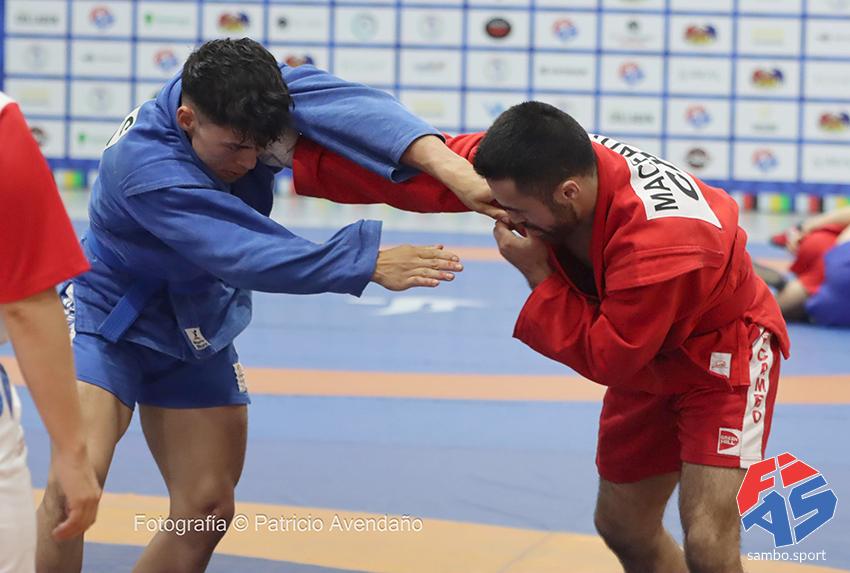
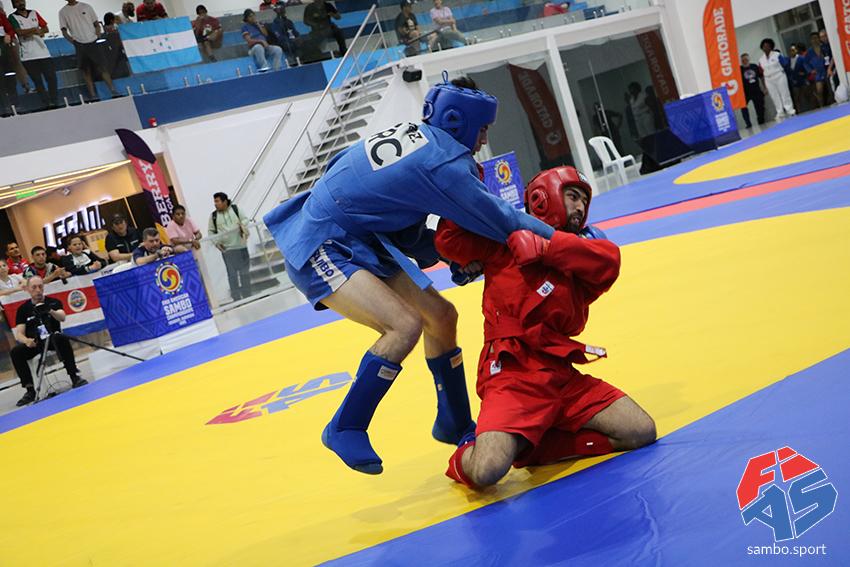
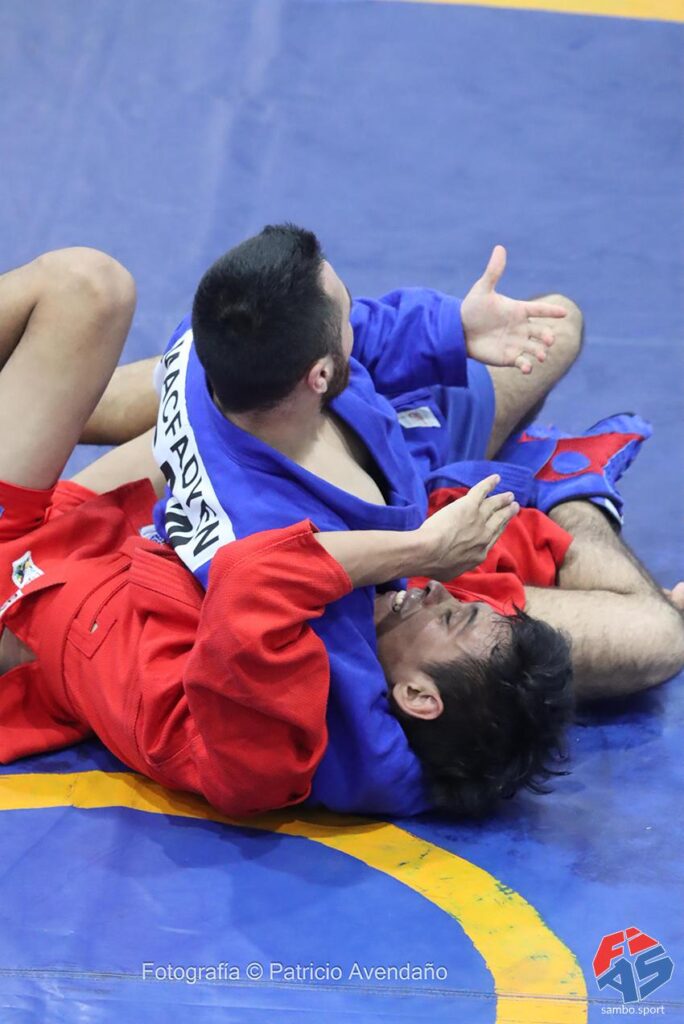
Sport Sambo places particular emphasis on throws, balance disruption, positional control, and submissions. Competitors must combine technical precision with physical endurance and a strong understanding of timing.
Every exchange begins with a tactical contest for grips and body position. A small shift in balance can create an opening for a decisive throw, while a successful defensive reaction can instantly change the direction of a match.
Torin’s bronze medal reinforced his standing among the leading competitors in his division across the Americas.
But his championship was not finished.
The following day brought an opportunity to compete for an even greater prize.
On June 28, Torin returned to competition in the men’s 58 kg Combat Sambo division.
This time, he reached the top of the podium.
According to the official FIAS results, Torin MacFadyen became the 2025 Pan American Combat Sambo Champion, with Brandon Jimenez of Costa Rica finishing second. Reynerl Sivira of Venezuela and Eric Beitz of the United States earned bronze.
The victory added another continental championship title to Torin’s record.
It also highlighted an important characteristic of his competitive development: the ability to succeed in both the grappling-focused environment of Sport Sambo and the broader technical demands of Combat Sambo.
Winning a continental title requires composure under pressure, physical conditioning, tactical awareness, and the confidence to apply techniques against experienced international opposition.
Those qualities are developed over years, not weeks.
For Torin, the gold medal in Ecuador represented another milestone in a competitive journey that began long before the 2025 championships.
To appreciate Torin’s achievement, it helps to understand the differences between Sport Sambo and Combat Sambo.
Both disciplines share a common technical foundation rooted in grappling, throws, takedowns, control, and submission techniques.
However, their competitive environments are significantly different.
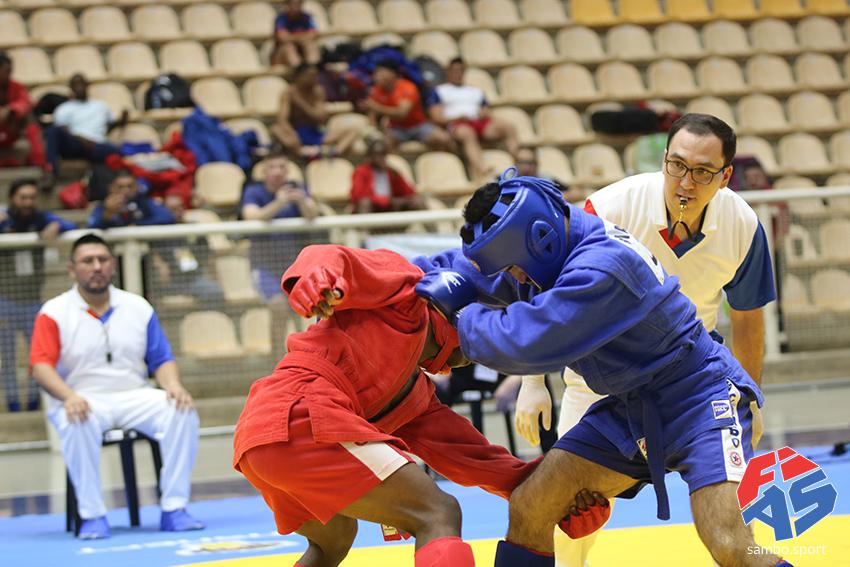
Sport Sambo emphasizes standing throws, wrestling exchanges, pins, and permitted submissions. Athletes wear a traditional Sambo jacket, known as a kurtka, along with shorts and wrestling footwear.
The jacket creates distinctive opportunities for gripping and control. Competitors must understand how to manipulate an opponent’s posture, establish leverage, and transition between standing and ground techniques.
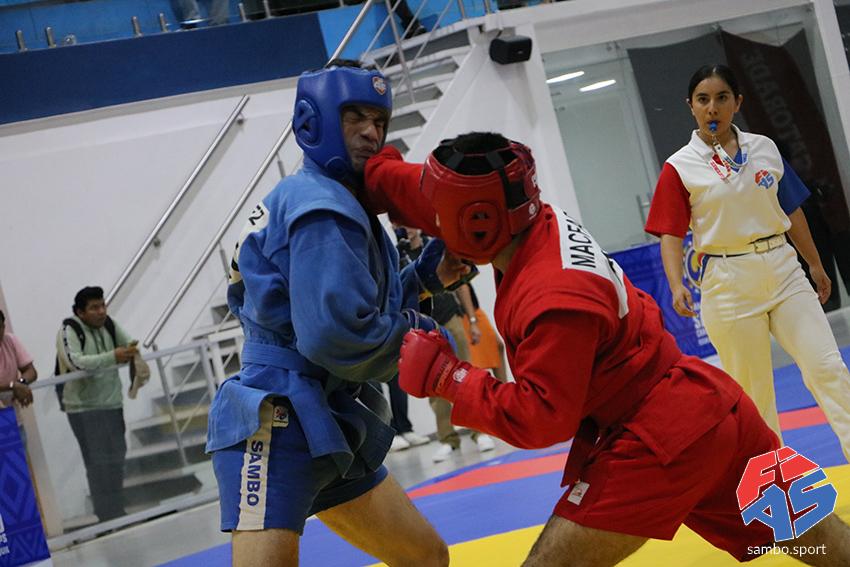
Combat Sambo expands that technical framework by allowing striking techniques, including punches and kicks, alongside takedowns and submissions under its competition rules.
This creates a more complex tactical environment.
A Combat Sambo athlete must be comfortable managing striking distance, defending attacks, entering safely into grappling exchanges, and adapting when a fight moves to the ground.
A technique that works effectively in Sport Sambo may require different timing or positioning when strikes are permitted.
That distinction makes achievement in both disciplines particularly noteworthy.
Modern martial arts competition increasingly rewards athletes who can move effectively between different ranges of combat.
A strong wrestler who struggles with striking distance may have difficulty establishing grips in Combat Sambo. Likewise, an experienced striker without a reliable grappling foundation can become vulnerable when an opponent closes the distance.
Torin’s background in Judo, wrestling, Sport Sambo, and Combat Sambo gives him a broad technical foundation.
Rather than relying on a single approach, a multidisciplinary athlete develops the ability to recognize opportunities as they appear.
A gripping exchange may create an opening for a throw. A failed takedown may lead to another attack. A defensive movement may provide the precise angle needed to regain control.
The goal is not simply to memorize more techniques.
It is to understand how different techniques connect.
This principle is central to the training philosophy at Tina Takahashi Martial Arts, where traditional martial arts fundamentals are complemented by practical applications across multiple combat sports.
Although Torin’s recent Pan American accomplishments have attracted attention, his competitive experience extends back to childhood and adolescence.
His documented tournament record shows involvement in national and international Judo and wrestling competitions from an early age.
In 2011, Torin won gold at the Canadian U17 Judo Championships and the National Cadet Wrestling Championships. That same year, he represented Canada at the FILA Cadet World Wrestling Championships in Szombathely, Hungary.
These early results established a foundation for the international competition that would follow.
In 2012, he continued building his record with a gold medal at the Canadian U18 Judo Championships.
He also captured gold at the Pan American Cadet Wrestling Championships in Maracaibo, Venezuela, and the Ontario Wrestling Championships.
Competing in both Judo and wrestling helped Torin develop complementary technical skills.
Judo emphasizes the relationship between balance, timing, movement, and efficient use of leverage. Wrestling contributes a different set of gripping, positioning, pressure, and takedown strategies.
Together, these disciplines can create an exceptionally adaptable grappling athlete.
As Torin progressed through the junior ranks, he continued testing himself against increasingly experienced opposition.
His competitive biography records a silver medal at the 2013 Canadian U18 Judo Championships and a bronze medal at the senior Canadian Judo Championships that same year.
He also won the Quebec Open International Judo U21 division in 2013.
In 2014, he earned bronze at the Canadian U21 Judo Championships and represented Canada at the Senior World Sambo Championships in Narita, Japan.
The transition from junior to senior competition presents a significant challenge for any athlete.
Physical maturity, tactical experience, and the ability to perform consistently against seasoned competitors become increasingly important.
Torin continued building that experience, earning a senior Canadian Judo silver medal in 2015 and a Canadian U21 silver medal in 2016.
These results were significant steps in a longer process of athletic development.
The year 2019 stands out as an important milestone in Torin’s international Sambo career.
At the Pan American Championships in Santo Domingo, Dominican Republic, he won gold in both Sport Sambo and Combat Sambo.
That double championship achievement established his ability to compete successfully at the continental level across both disciplines.
His biography also records a bronze medal at the 2019 Baikal Cup International Combat Sambo Championships in Irkutsk, Russia.
International tournaments expose athletes to different coaching traditions and competitive styles, often creating opportunities to identify weaknesses and strengthen their technical approach.
For Torin, those experiences helped build the competitive foundation he carried into the 2025 Pan American Championships.
His gold and bronze medals in Ecuador therefore represent more than isolated results.
They form part of a sustained record of international-level achievement.
Behind Torin’s development stands one of Ottawa’s most distinguished martial arts families.
The Takahashi family’s involvement in Canadian Judo stretches back more than half a century.
Masao Takahashi, an eighth-degree Judo black belt and former military combat instructor, established the family’s martial arts tradition in Ottawa during the 1960s, building an environment where technical excellence, discipline, respect, and dedication became central values.
Their children continued that tradition through competition, coaching, and leadership.
Among them was Tina Takahashi, who would become a prominent figure in Canadian women’s Judo and international Sambo.
Tina’s achievements include a world championship title in Sambo, extensive success in international Judo, and service as a Canadian Olympic Judo coach.
She has also been recognized through induction into the Ottawa Sports Hall of Fame.
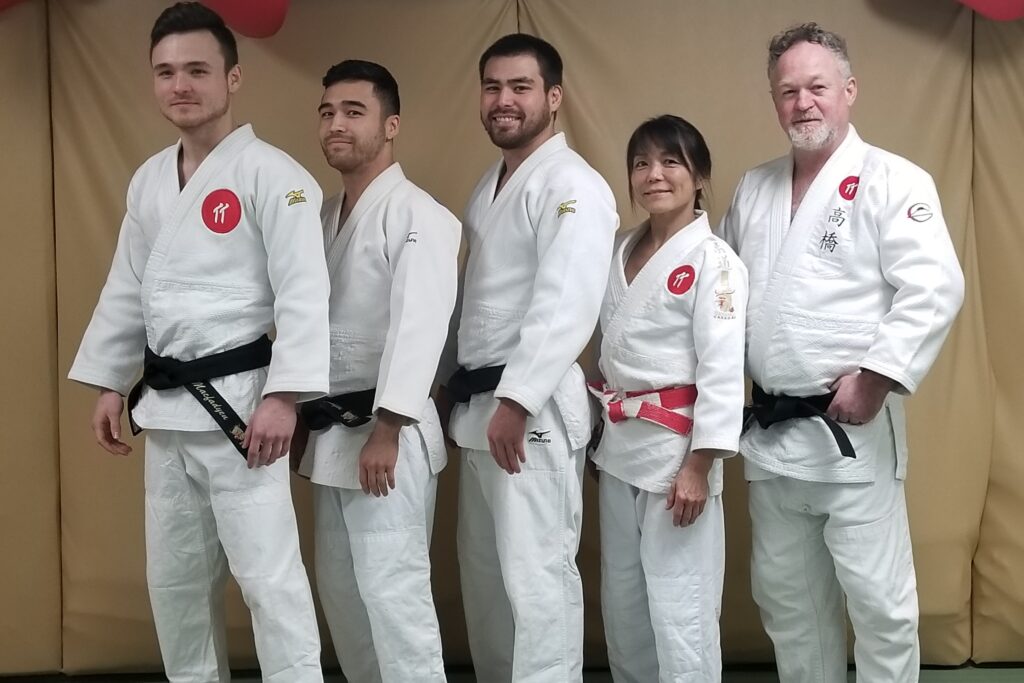
Today, those decades of experience continue through Tina Takahashi Martial Arts, where the family combines traditional martial arts instruction with modern competitive training.
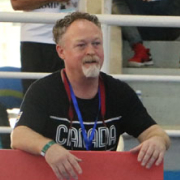
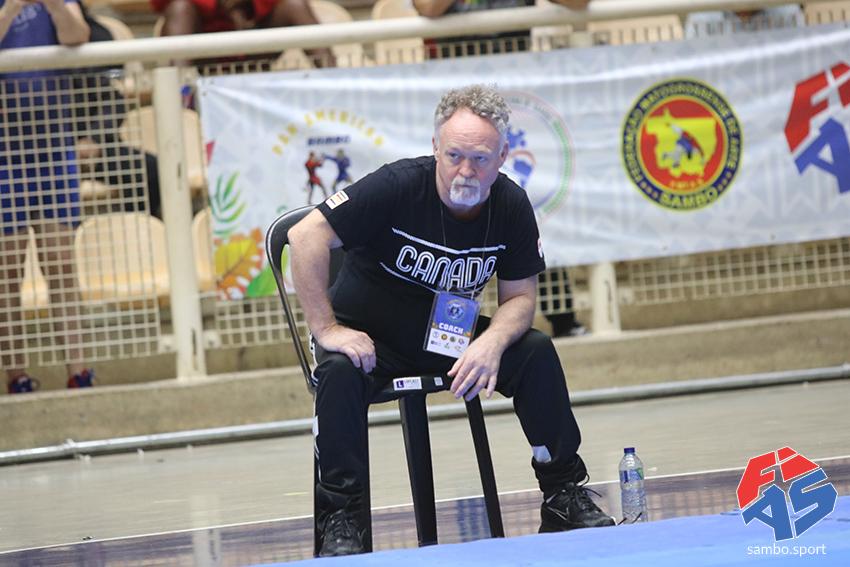
Torin’s father, Sensei Sean MacFadyen, has devoted decades to martial arts as both an instructor and a coach.
His experience encompasses Judo, Sport Sambo, Combat Sambo, and other grappling disciplines.
As a Canadian national-level Sambo coach, Sean has played an important role in preparing athletes for international competition.
Training for tournaments requires much more than developing physical strength.
A coach must help competitors understand their technical strengths, recognize tactical patterns, manage the demands of intensive preparation, and make adjustments when facing unfamiliar opponents.
At the international level, the relationship between athlete and coach becomes particularly important.
Months of preparation may need to be translated into a practical strategy within moments.
For Torin, growing up in this environment meant access to experienced instruction and regular exposure to high-level martial arts.
It also meant learning that competitive success comes with responsibility.
Talent provides opportunities, but consistency, discipline, and long-term commitment determine how far an athlete can progress.
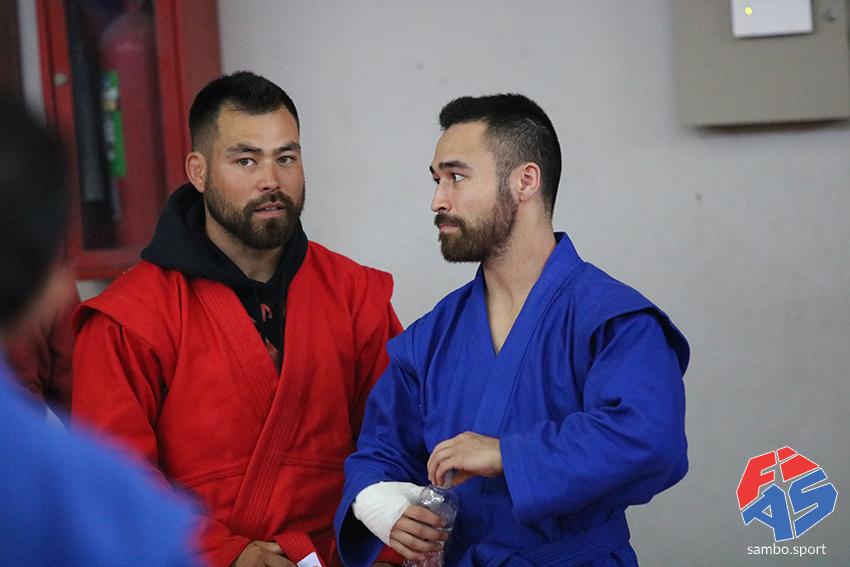
Torin is one of three MacFadyen brothers whose competitive careers reflect the family’s multidisciplinary approach.
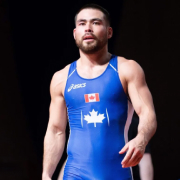
Adam MacFadyen has achieved success in wrestling, Judo, and Sambo, including a Pan American Sport Sambo championship title.
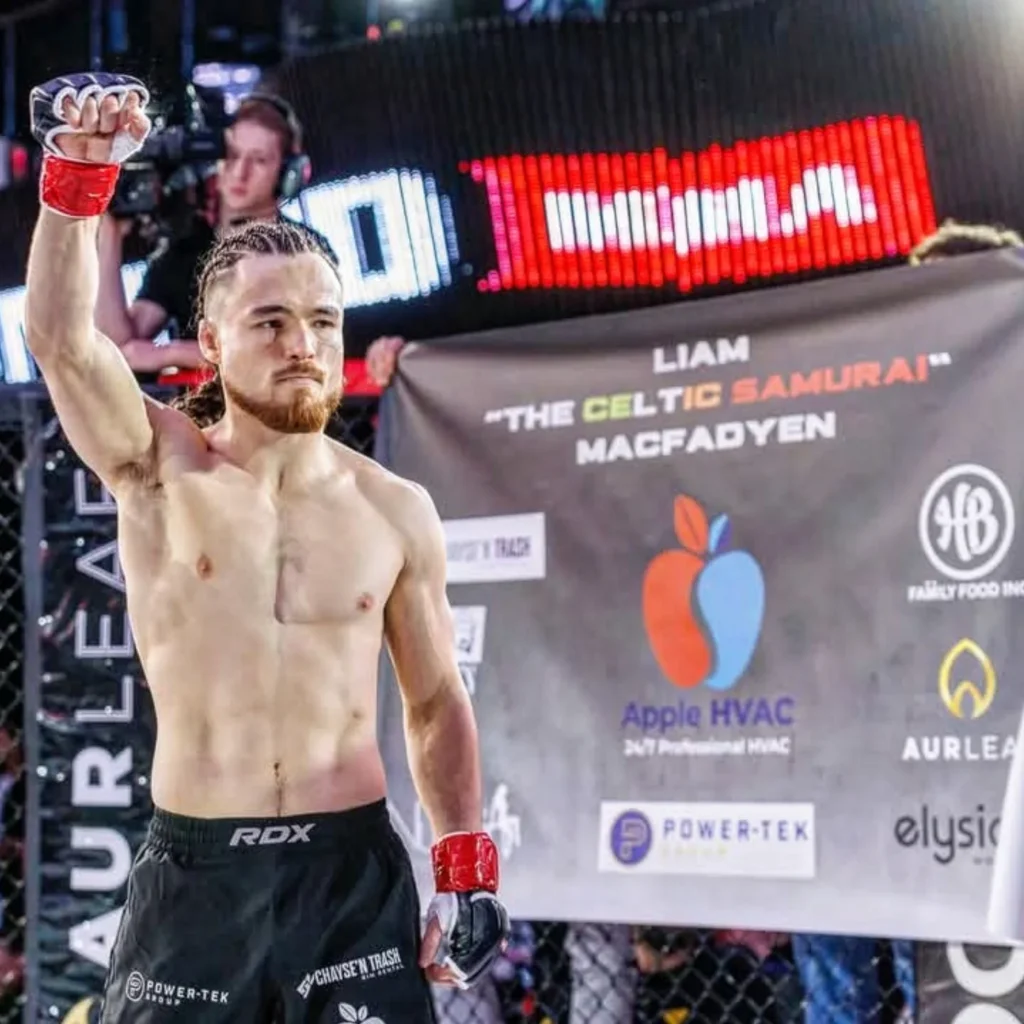
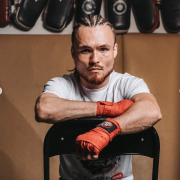
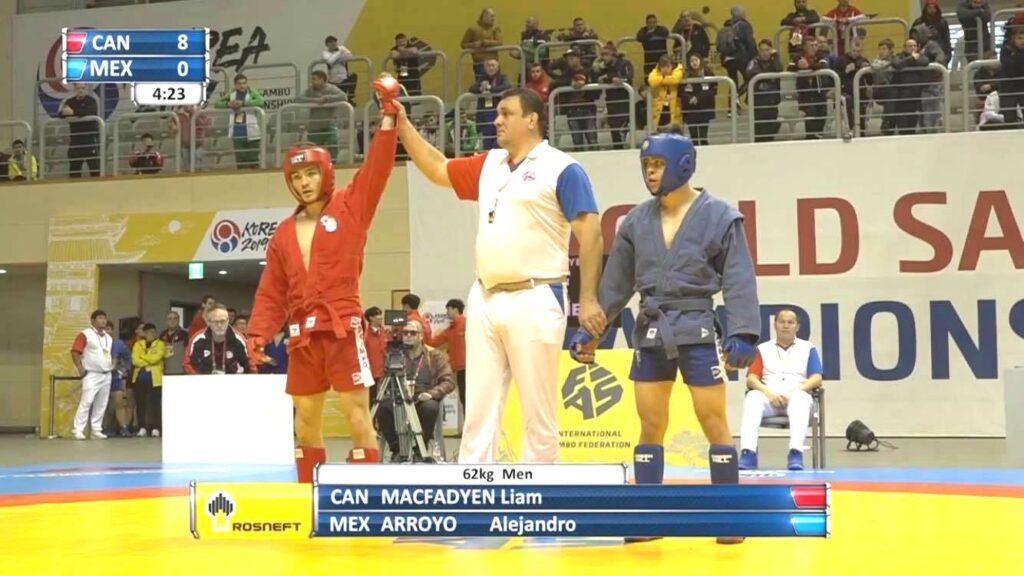
Liam MacFadyen has pursued competition in Muay Thai, Combat Sambo, and mixed martial arts.
The summer of 2026 also brought another achievement for Liam, who secured his sixth MMA victory in Montreal. Together with Adam’s and Torin’s Pan American gold medals in Costa Rica, the result made it an especially successful season for all three MacFadyen brothers.
All three developed their skills within a family where training was a regular part of life.
Their different competitive paths illustrate the versatility of a strong grappling foundation.
For aspiring athletes, this family history demonstrates that technical development does not need to be limited to a single martial art.
The principles of balance, leverage, timing, positioning, and mental discipline can carry across multiple forms of competition.
Torin was not the only member of the MacFadyen family to reach the podium at the 2025 Pan American Championships.
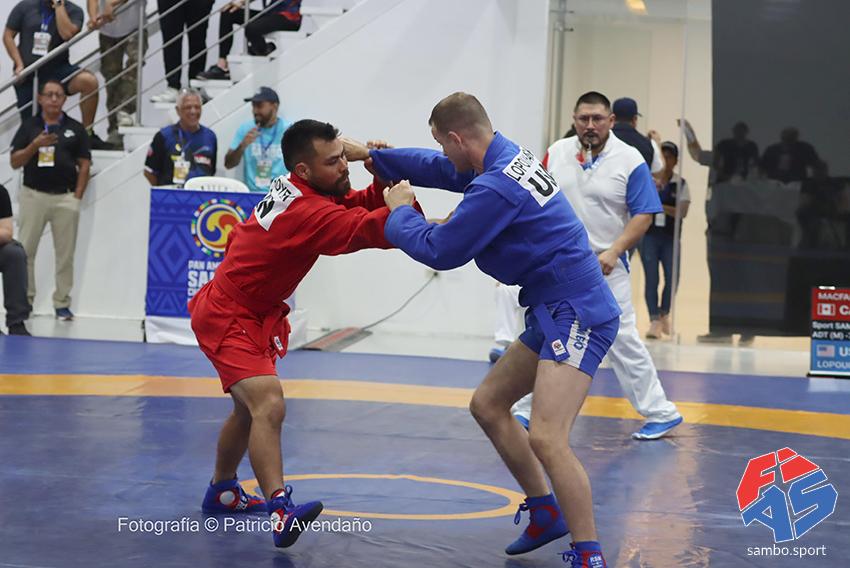
His brother Adam also represented Canada in Guayaquil, earning a bronze medal in the men’s 71 kg Sport Sambo division.
The official results list Ivan Lopouchanski of the United States as the gold medalist and Daniel Gutierrez of Colombia as the silver medalist, with Adam MacFadyen and Sandy Mijares of Venezuela taking bronze.
For the MacFadyen family, the tournament therefore produced multiple medals across different divisions.
These results reflected a shared commitment to competition and the continuation of a martial arts tradition that has shaped generations of athletes in Ottawa.
The success of both brothers also demonstrated Canada’s ability to produce competitive international Sambo athletes.
Although Sambo may not have the same mainstream recognition in Canada as Judo or wrestling, Canadian competitors have continued to establish themselves internationally.
Every medal contributes to that growing history.
The MacFadyen brothers carried their success into 2026, delivering another outstanding performance for Canada at the Pan American Sambo Championships in Costa Rica.
This time, both brothers returned home as Pan American champions, each claiming a gold medal in his respective discipline.
Adam MacFadyen captured gold in Men’s Sport Sambo at 64 kg, adding another continental title to his impressive record in wrestling, Judo, and Sambo.
Torin MacFadyen won gold in Men’s Combat Sambo at 58 kg, successfully extending his championship legacy following his gold medal performance in Ecuador the previous year.
Their victories made the summer of 2026 another memorable chapter in the Takahashi-MacFadyen family’s sporting history.
For the Ottawa-based martial arts academy, seeing two brothers reach the top of the Pan American podium in the same year was a remarkable achievement and a testament to the years of training, perseverance, and dedication behind their success.
These results further strengthened the family’s international competitive legacy and demonstrated the continued excellence of Canadian athletes in both Sport Sambo and Combat Sambo.
Following his success in Ecuador, Torin’s attention has turned toward another major opportunity.
The 2026 World Sambo Championships are scheduled for November 6–8 in Tashkent, Uzbekistan, at the Game Sports Arena in the Olympic Village.
The event will bring together elite competitors in Sport Sambo, Combat Sambo, and Blind Sambo.
It is also a landmark edition of the championship, marking the tournament’s 50th anniversary.
According to the International Sambo Federation’s official regulations, athletes will compete across designated weight categories, with national delegations entering their representatives through the federation’s registration system.
Sean MacFadyen has identified the World Championships as an important upcoming event in Torin’s schedule and has been preparing to travel to Uzbekistan with him.
For an experienced international athlete, a World Championship presents challenges beyond those encountered at regional and continental events.
The range of opponents is broader, the technical diversity can be greater, and small tactical mistakes may carry significant consequences.
Each match demands concentration from the opening exchange to the final decision.
An athlete preparing for a World Sambo Championship must develop several qualities simultaneously.
Technical efficiency is essential because opponents at this level are skilled at recognizing familiar attacks and defending common combinations.
Physical conditioning allows an athlete to maintain explosive movements, grip strength, and defensive reactions throughout demanding matches.
Tactical adaptability becomes crucial when an opponent’s preferred approach differs from the styles encountered during regular training.
Mental resilience helps competitors respond to setbacks, maintain composure, and avoid allowing pressure to dictate their decisions.
These qualities are interconnected.
A technically skilled athlete may struggle when fatigue affects decision-making. Excellent physical conditioning alone cannot replace timing or positional awareness.
International success depends on bringing all of these elements together.
For Torin, the lessons learned through years of competition provide a valuable foundation for the next stage of his career.
One advantage experienced competitors possess is the ability to recognize patterns under pressure.
A young athlete may respond instinctively to an opponent’s movement without fully understanding its tactical significance.
With years of practice, those reactions can become more deliberate.
Changes in grip pressure, weight distribution, posture, and foot placement begin to reveal information about an opponent’s intentions.
This is especially important in Sambo, where the transition from a standing exchange to a throw or submission can happen extremely quickly.
Torin’s competitive history across several martial arts provides extensive experience with these challenges.
However, the World Championships remain an unpredictable environment.
Past medals cannot guarantee future results.
They can, however, demonstrate that an athlete has successfully navigated high-pressure competition before.
That experience will be an important part of Torin’s preparation for Tashkent.
One of the most valuable lessons from Torin’s career is that achievement develops over time.
His record includes victories in youth tournaments, national championships, international competitions, and senior-level events.
Each stage required new adjustments.
Techniques that succeed against beginners may prove ineffective against experienced competitors. Strategies that work at the regional level may need refinement before an international tournament.
Improvement comes from studying those differences and returning to training with a clearer understanding of what needs work.
For students beginning Judo or Sambo, this is an important reminder.
The value of training is not measured only by medals.
Learning a reliable breakfall, improving a throw, developing better balance, or becoming more comfortable with controlled sparring are meaningful achievements.
Those smaller improvements gradually create the foundation for larger goals.
Competition teaches lessons that extend well beyond athletic performance.
Victory requires humility, while defeat demands the willingness to assess mistakes and improve.
Even accomplished international competitors experience difficult matches and disappointing results.
The challenge is to approach both outcomes constructively.
A successful athlete must learn to separate personal identity from the result of an individual contest.
One victory does not mean there is nothing left to learn.
One defeat does not erase years of progress.
At Tina Takahashi Martial Arts, this broader understanding of martial arts is part of a philosophy that emphasizes character development alongside physical skill.
Judo and Sambo demand close cooperation between training partners.
To develop effective techniques, athletes must challenge one another while maintaining an environment of mutual responsibility.
Partners provide resistance, create realistic problems, and help one another refine their abilities.
Without that cooperation, meaningful progress becomes difficult.
This relationship teaches an important principle: strength is not simply the ability to overpower another person.
It also involves discipline, restraint, and respect.
Those lessons are relevant to children learning martial arts for the first time and adults pursuing serious competitive goals.
Sambo has a distinctive place among modern combat sports.
Its technical roots draw from multiple grappling traditions, producing a system that emphasizes practical movement, efficient takedowns, and rapid transitions.
In Sport Sambo, athletes learn to combine standing wrestling with submissions and control.
Combat Sambo adds striking and a more varied competitive environment.
Both disciplines require athletic coordination, body awareness, and the ability to make fast decisions under pressure.
For practitioners with backgrounds in Judo, wrestling, Brazilian Jiu-Jitsu, or mixed martial arts, Sambo offers opportunities to broaden technical understanding.
Its jacket-gripping methods, leg-lock techniques, and transitional grappling strategies can challenge familiar habits.
Learning to work under another set of rules encourages athletes to reconsider how they approach distance, balance, and control.
Canada has a long history of achievement in Judo and wrestling, but Sambo remains less familiar to many recreational martial artists.
International results from athletes such as Torin and Adam MacFadyen help introduce the discipline to a wider audience.
They also demonstrate the opportunities available to athletes who are willing to explore multiple competitive systems.
At Tina Takahashi Martial Arts, students have the opportunity to learn from instructors whose experience includes national and international competition.
The practical benefit of such instruction extends beyond preparing future champions.
Experienced coaches can help beginners understand correct technique, develop safe training habits, and build confidence through progressive learning.
For some students, martial arts will remain an enjoyable way to stay active and develop discipline.
Others may discover a passion for competition.
Both paths begin with the same foundation: consistent training and a willingness to learn.
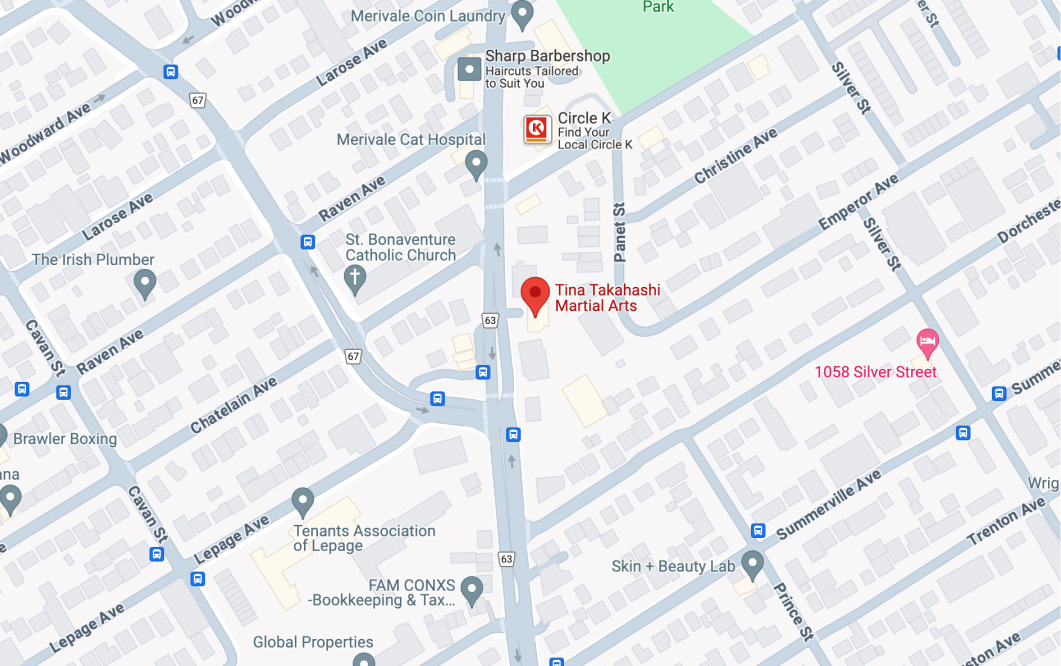
Located at 1061 Merivale Road in Ottawa, Ontario, Tina Takahashi Martial Arts brings together generations of martial arts experience in a training environment focused on technical development and personal growth.
The academy’s instruction draws from Judo, Sambo, Combat Sambo, and other martial arts disciplines.
Students learn to understand movement rather than simply imitate it.
Why does a throw work? How does a change in balance affect an opponent? What makes one position stronger than another? How can an athlete improve efficiency instead of relying exclusively on muscular strength?
These questions are important at every level.
For beginners, they help create a clearer understanding of fundamental techniques.
For advanced students, they form the foundation of tactical development.
Championship results are an important part of the academy’s history, but competitive success is only one measure of effective martial arts instruction.
Training also provides opportunities to develop patience, responsibility, physical coordination, and resilience.
Children learn to follow instructions, respect their training partners, and recognize the value of steady improvement.
Adults can develop functional strength, cardiovascular fitness, balance, and practical self-defense skills in a structured environment.
For students interested in pursuing competition, the experience of the Takahashi-MacFadyen family offers a valuable connection to the international martial arts community.
The same principles that contribute to championship preparation—discipline, technical precision, perseverance, and respect—remain relevant to every student who steps onto the mat.
Torin MacFadyen’s 2025 Pan American performance represents a significant achievement in an already accomplished martial arts career.
A bronze medal in Sport Sambo followed by gold in Combat Sambo demonstrated his ability to compete successfully across two demanding disciplines at the continental level.
Building on their success in Ecuador in 2025, Torin and Adam MacFadyen reached new heights in 2026, both capturing gold medals at the Pan American Sambo Championships in Costa Rica. Their remarkable achievements represent another proud chapter in the family’s long-standing martial arts tradition and reinforce the Takahashi-MacFadyen legacy of excellence on the international stage.
But a competitive career is never defined entirely by its previous accomplishments.
Every tournament presents new opponents, unfamiliar challenges, and opportunities for growth.
With the 2026 World Sambo Championships approaching in Tashkent, Torin’s next chapter is taking shape.
His experience offers inspiration to students in Ottawa and beyond: achievement requires patience, technical development, persistence, and the courage to test yourself against increasingly difficult challenges.
For the Takahashi-MacFadyen family, those principles have guided generations of martial artists.
For Torin, they remain part of the journey ahead.
From the tatami in Ottawa to championship podiums across the Americas, his story is a reminder that great achievements begin with the decision to train, learn, and keep improving.
Whether your goal is to become an international competitor, develop practical self-defense skills, or simply discover what martial arts can bring to your life, Tina Takahashi Martial Arts welcomes those ready to begin their own journey.
Visit Tina Takahashi Martial Arts to learn more about our Judo, Sambo, Combat Sambo, and other martial arts programs in Ottawa.






 Back-to-Back Pan American Sambo Gold and the Road to the 2026 World Championships
The Secret to Better Grades? Why Focus on the Tatami Translates to the Classroom
The Ultimate Hybrid: Why Combat Sambo is the Closest Thing to Real Street Defense
Mastering the Throw: The Hidden Biomechanics of Olympic Judo
Back-to-Back Pan American Sambo Gold and the Road to the 2026 World Championships
The Secret to Better Grades? Why Focus on the Tatami Translates to the Classroom
The Ultimate Hybrid: Why Combat Sambo is the Closest Thing to Real Street Defense
Mastering the Throw: The Hidden Biomechanics of Olympic Judo


 Martial Arts For Kids
  Judo for Kids
  Karate for Kids
 Judo
Judo  Combat Sambo
  Jiu-Jitsu
  Muay Thai & Kickboxing
 Black Belt Club
  Martial Arts Birthday Party
  After School Program
  Tina Takahashi
  Sean MacFadyen
  Adam MacFadyen
  Torin MacFadyen
  Liam MacFadyen
  Events
  Blog
Blog  Gallery

 131
131