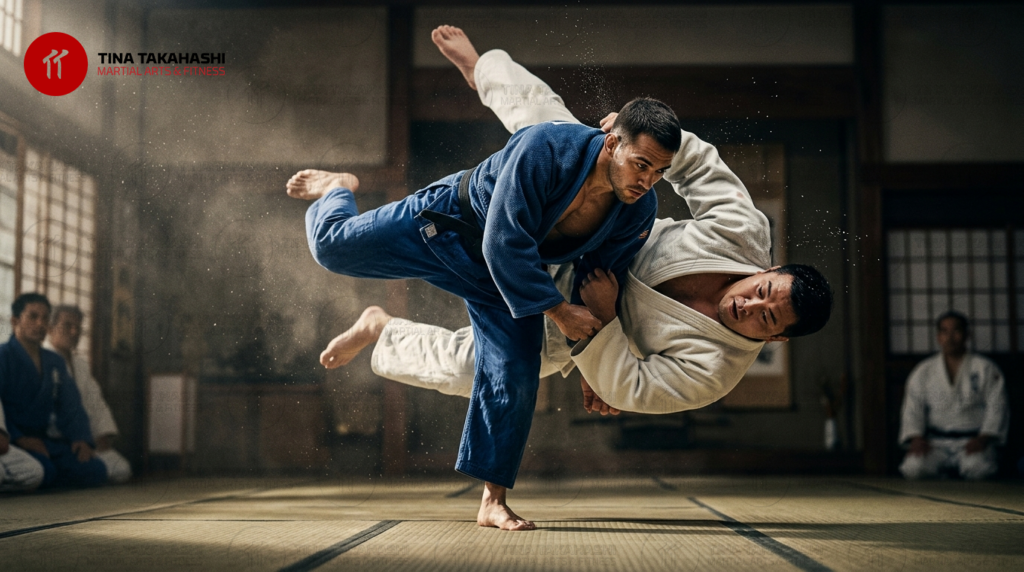
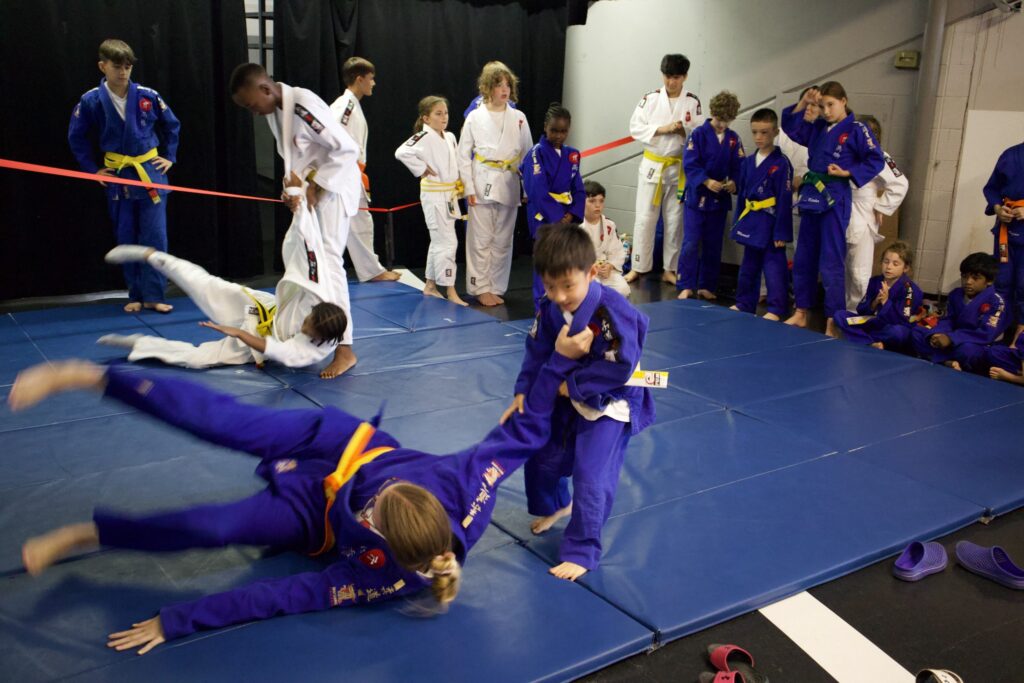
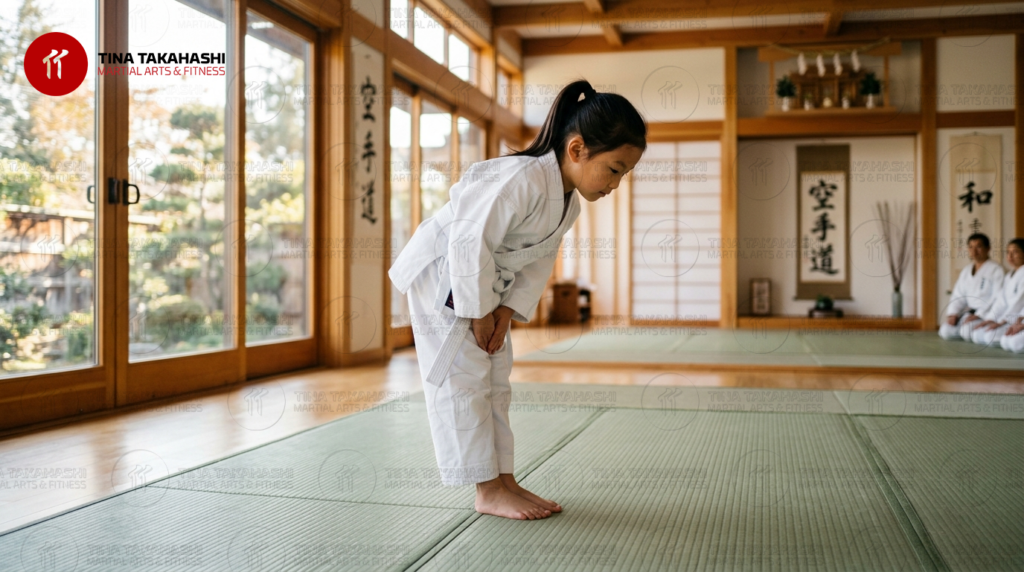
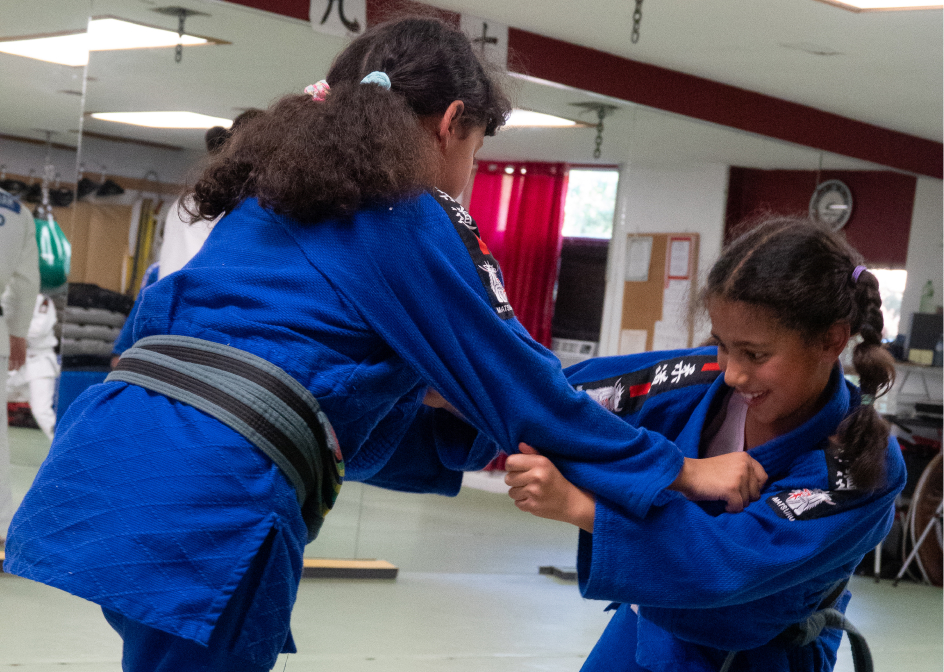
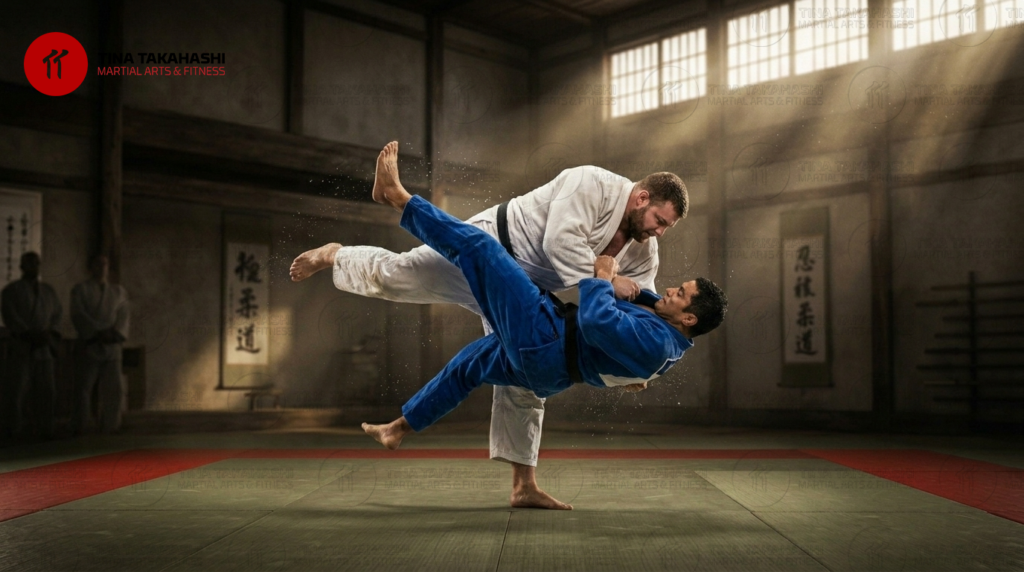
If you have ever watched high-level Olympic Judo, you have likely witnessed a moment of pure physical magic. Two elite athletes, gripping each other’s thick cotton uniforms, engage in a tense, high-speed battle of grips and footwork. Suddenly, in the blink of an eye, one competitor is effortlessly launched through the air, landing squarely on their back with a resounding impact. To the untrained eye, it looks as though the victorious athlete possesses superhuman strength. However, the true secret behind these spectacular, high-flying techniques is not brute force—it is the masterful application of advanced biomechanics, physics, and anatomical leverage.
In today’s modern fitness landscape, many adults and athletes eventually plateau because they focus exclusively on lifting static weights in linear planes of motion. They build impressive muscle mass, but they often lack the functional, three-dimensional kinetic awareness required to manipulate external weight under immense pressure. Welcome to Tina Takahashi Martial Arts, Ottawa’s premier martial arts school, where we teach the profound science of “The Gentle Way”. We have been proudly serving the community in the nation’s capital and the surrounding region—including the Upper Valley, Gatineau, Hull, and Aylmer—for over 40 years.
When you step onto our mats, you do not just learn how to fight; you learn how to master the fundamental laws of physics. Understanding the hidden biomechanics of Judo not only demystifies the art of the throw but also reveals exactly why Judo is one of the most intellectually engaging and physically transformative full-body workouts in the world.
To truly comprehend the mechanics of a Judo throw, we must first look at the foundational philosophy established by Judo’s visionary founder, Jigoro Kano, in 1882. The core tenet of Judo is Seiryoku Zenyo, which translates from Japanese to English as “maximum efficiency with minimum effort.” But how does one throw a 200-pound resisting opponent with “minimum effort”? The answer lies in the fundamental laws of classical mechanics: specifically, the strategic manipulation of the Center of Mass (CoM) and the Base of Support (BoS).
Every human being standing upright has a center of mass located roughly around their pelvic region, balanced precariously over their base of support (their feet). As long as the center of mass remains directly above the base of support, the person is structurally stable. If a martial artist tries to forcefully lift and throw a stable opponent, they must overcome the entire dead weight and active muscular resistance of that person. This approach leads to immediate muscular exhaustion and highly ineffective technique.
Judo intelligently bypasses this physical gridlock. Instead of meeting kinetic force with kinetic force, a Judoka (Judo practitioner) utilizes specialized, fluid footwork (Tai-Sabaki) and strategic gripping (Kumi-Kata) to manipulate the opponent’s center of mass, deliberately shifting it outside their base of support. Once the opponent is structurally compromised, they become incredibly light. Gravity does the heavy lifting; the Judoka merely guides the aerodynamic trajectory of the fall.
Every successful Judo throw, whether it is a spectacular hip throw (O-Goshi) or an intricate, sweeping foot technique (De-Ashi-Barai), is meticulously divided into three distinct, sequential biomechanical phases. Missing any single phase results in a failed technique and leaves the practitioner vulnerable to counterattacks.
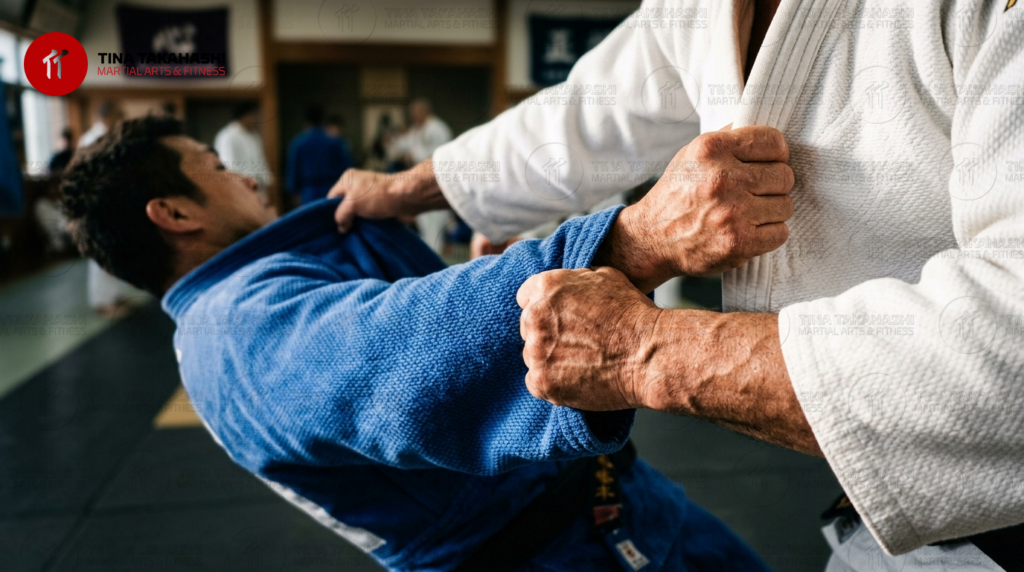
Kuzushi is the absolute prerequisite for any throw. Without first breaking your opponent’s balance, executing a technique against a resisting partner is nearly impossible. In traditional Judo, there are eight primary directions of off-balancing (happo-no-kuzushi): front, back, left, right, and the four corners.
Mechanically, Kuzushi is achieved through a brilliant combination of action-reaction dynamics and intense grip fighting. By firmly gripping the opponent’s lapel (Eri) and sleeve (Sode), the Judoka creates a rigid connection—a physical steering wheel. If an opponent pushes forward with aggressive force, the Judoka does not resist; instead, they pull the opponent further forward, accelerating their momentum and pulling them onto their tiptoes. At this precise micro-second, the opponent’s center of mass is floating dangerously in front of their toes. They are structurally weightless and physically desperate to regain balance, making them prime for the next technical phase.
Once the opponent’s balance is utterly broken, the Judoka must instantaneously execute Tsukuri—the act of fitting their own body into the optimal biomechanical position to execute the throw. This crucial phase essentially transforms the human body into a highly efficient mechanical lever.
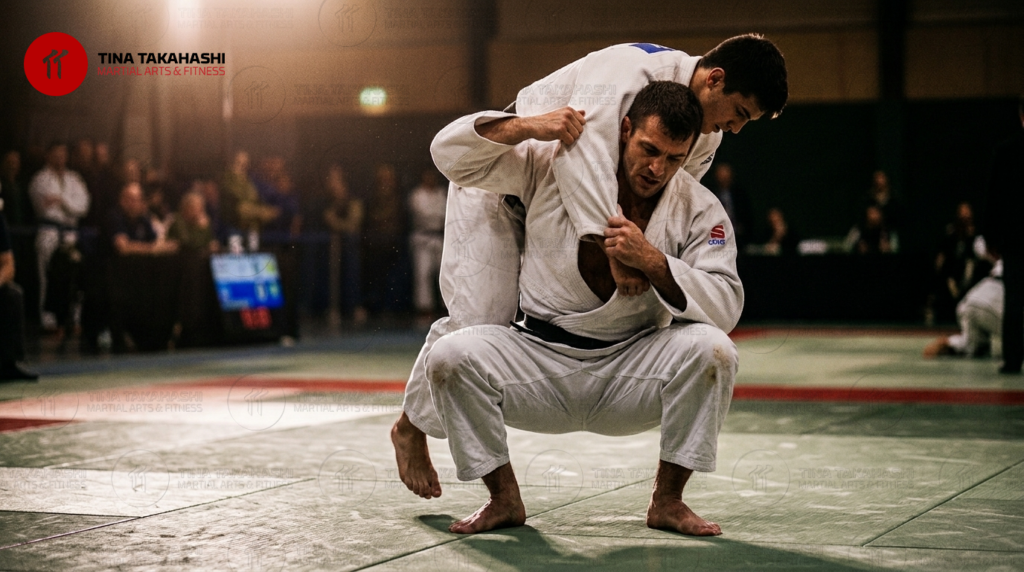
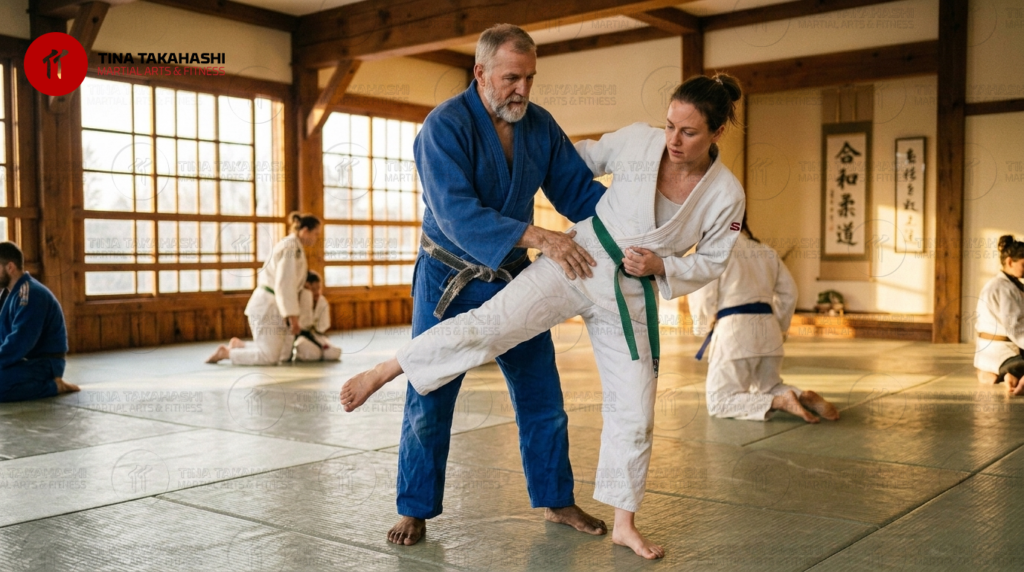
For a forward hip throw like Seoi-Nage (shoulder throw) or Harai-Goshi (sweeping hip throw), Tsukuri involves rapid rotational footwork and profound level changing. The Judoka must drop their own hips significantly lower than their opponent’s hips while maintaining a straight spine. By lowering their center of gravity beneath the opponent’s center of mass, the Judoka effectively turns their own hips into a fulcrum (the pivot point of a lever). The opponent’s body becomes the load, and the Judoka‘s upper body pulling down serves as the applied force. Because of this massive mechanical advantage, a smaller practitioner can effortlessly lever a much larger attacker completely off the tatami.
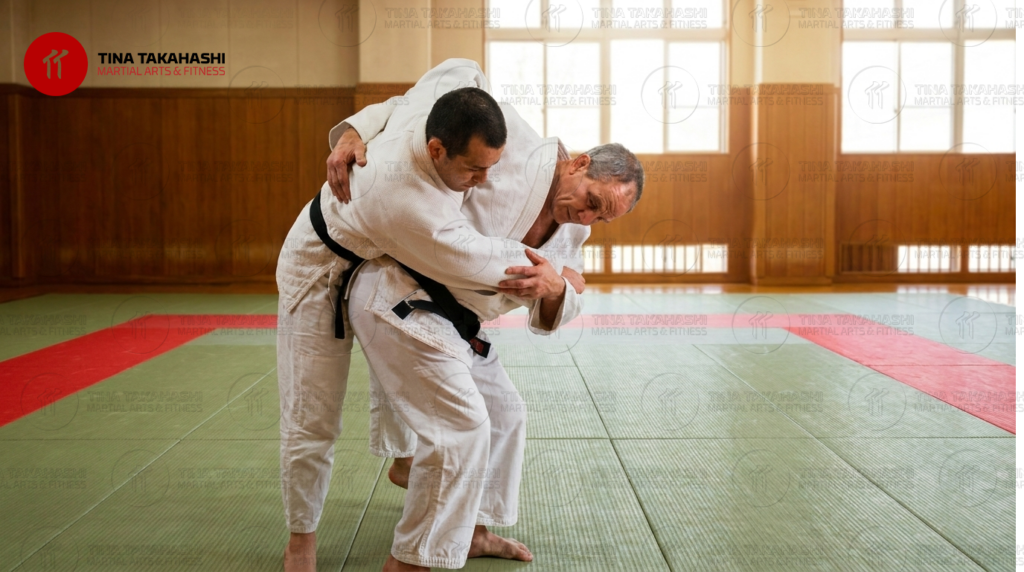
Kake is the final culmination of the technique—the actual execution of the throw. With the opponent off-balanced (Kuzushi) and fully loaded onto the hip or shoulder fulcrum (Tsukuri), the Judoka applies explosive rotational torque.
This is never just an upper-body pull; it is a full-body kinetic chain reaction. The power generates from the feet pushing into the tatami, travels up through the legs, multiplies in the violent rotation of the core and hips, and ultimately snaps through the gripping hands. The opponent’s body is launched in a parabolic arc. The sheer efficiency of Kake ensures that the throw is executed with devastating speed and precision, completely neutralizing the physical threat before they even realize they have left the ground.
To truly appreciate the diversity of Judo biomechanics, we must examine how different techniques manipulate physics in entirely opposite directions.
Ippon Seoi-Nage is one of the most iconic and visually spectacular throws in Judo. Biomechanically, it is a masterclass in utilizing the fulcrum. The Judoka aggressively pulls the opponent forward (Kuzushi), forcing them onto their toes. Simultaneously, the Judoka pivots 180 degrees, dropping their hips deep beneath the opponent’s belt line while clamping the opponent’s right arm tightly to their shoulder (Tsukuri). The Judoka then powerfully straightens their legs and bows forward (Kake). The opponent is levered entirely over the shoulder, rotating through the air. The lower the Judoka can drop their hips during the entry, the less effort is required to hoist the opponent, proving that superior technique will always triumph over raw muscle.
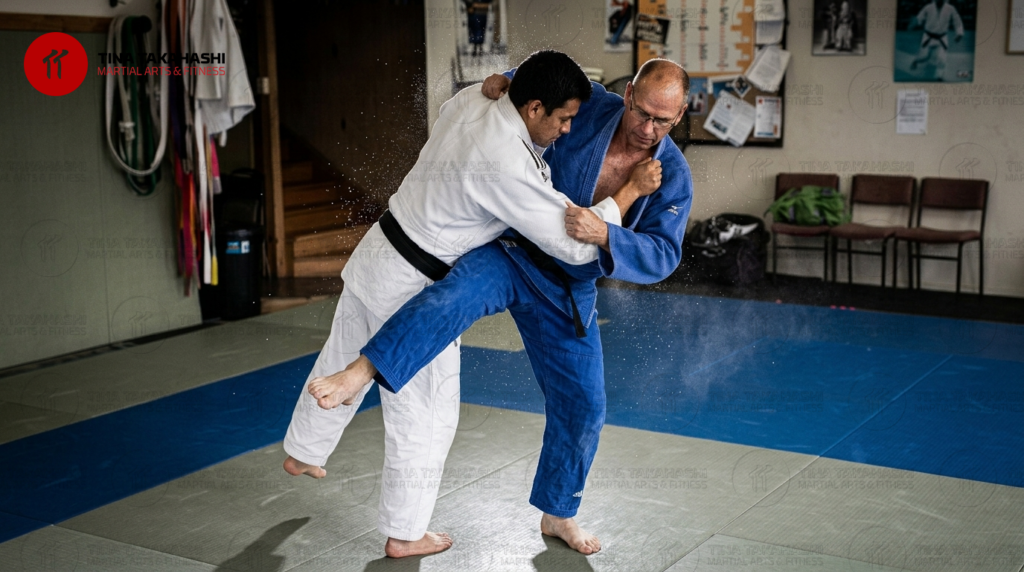
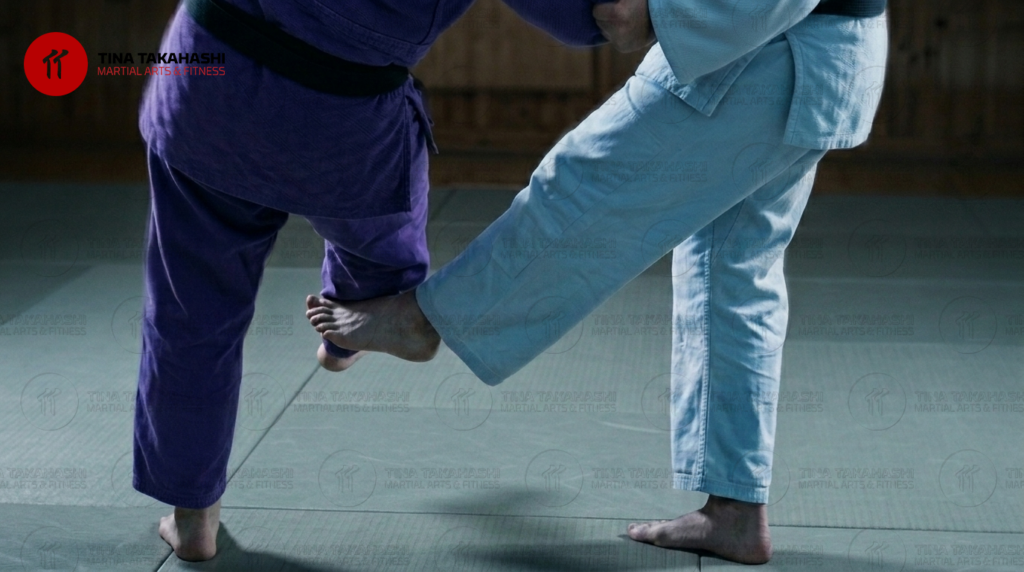
In stark contrast to forward throws, Osoto-Gari attacks the opponent’s posterior balance. Instead of pulling the opponent forward, the Judoka steps deep to the outside of the opponent’s leg and drives their weight forcefully backward and to a specific rear corner (Kuzushi). This traps all of the opponent’s body weight onto one single heel. With the opponent immobilized on one leg, the Judoka uses their own leg as a pendulum, sweeping the opponent’s trapped supporting leg out from under them with immense force (Kake). Because the opponent has no base of support left, gravity takes over instantly, resulting in a powerful, concussive fall.
Understanding the hidden biomechanics of Judo also reveals exactly why it is universally considered one of the most grueling and effective total-body workouts in existence. Executing these three phases against a highly resisting partner engages virtually every muscle fiber in the human body, taxing multiple energy systems simultaneously.
Securing and maintaining dominant grips on a heavy, textured cotton gi requires immense forearm, wrist, and hand strength. However, breaking an opponent’s balance (Kuzushi) relies heavily on the major pulling muscles of the back. The latissimus dorsi, rhomboids, and trapezius must contract with explosive power to snap the opponent off their centerline. Simultaneously, the posterior deltoids and biceps work to steer and control the opponent’s posture, building profound upper-body thickness and functional kinetic pulling power.
In standard linear gym workouts, the core is often relegated to simple flexion (crunches) or static stabilization (planks). In Olympic Judo, the core is the vital rotational engine of the body. Generating the immense torque required for Tsukuri and Kake heavily taxes the internal and external obliques, the transverse abdominis, and the erector spinae along the lower back. This constant, high-velocity twisting under heavy external loads builds a bulletproof, three-dimensional midsection that protects the spine and dramatically enhances all athletic movements.
To establish the fulcrum of the lever, a Judoka must constantly perform rapid, deep squats while actively supporting external weight. This dynamic level changing heavily engages the quadriceps, hamstrings, and gluteus maximus. Furthermore, sweeping throws like Uchi-Mata (inner thigh throw) require incredible unilateral (single-leg) balance and explosive hip extension, forging powerful, athletic legs and highly mobile, resilient hip joints.
Beyond raw muscle, Judo forces the central nervous system to adapt at an astonishing rate. Practicing complex biomechanical throws enhances proprioception—the body’s subconscious ability to sense its movement, action, and location in space. Reacting to an opponent’s shifts in weight requires rapid firing of fast-twitch muscle fibers, improving overall bodily coordination, reflexes, and athletic agility far beyond what isolated weight training can provide.
When you are ready to learn the deeply intricate, highly scientific biomechanics of Judo, the pedigree of your instructors is the absolute most critical factor in your success. What truly sets Tina Takahashi Martial Arts apart from any other training facility, commercial fitness center, or martial arts club in Ottawa is the unparalleled expertise, rich historical roots, and elite championship legacy of our leadership team.
Our prestigious school is built upon the powerful foundation laid by Master Masao Takahashi, an 8th Degree Black Belt and former NATO Combat Instructor who opened his very first Canadian dojo at Uplands Air Force Base in Ottawa in 1965. Master Takahashi’s profound understanding of martial biomechanics was so highly regarded globally that his textbook, “Mastering Judo,” became a foundational resource for practitioners worldwide. As noted by practitioners, this textbook is so instrumental that many use it extensively to obtain their Black Belt (Shodan).
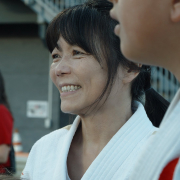
Today, this elite, world-renowned legacy is actively led and expanded by Master Tina Takahashi. Master Takahashi is a true, celebrated pioneer in international women’s martial arts, a World Sambo Champion, a former Olympic Coach, an inducted member of the Ottawa Sports Hall of Fame, and holds a prestigious 7th Degree Black Belt from the legendary Kodokan Judo Institute in Tokyo, Japan.
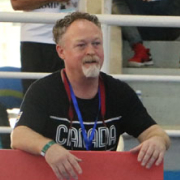
She is joined on the mats by her husband, Master Sean MacFadyen, a 6th-Degree Black Belt with over 40 years of dedicated training who currently serves as Canada’s national coach for Sport & Combat Sambo. Together with their champion sons, including elite practitioners like Liam MacFadyen, they represent one of North America’s premier martial arts dynasties.
When you step onto our tatami, you are not just scanning a gym card; you are entering a true academy of self-mastery. You have the incredibly rare and unique opportunity to be taught, mentored, and corrected directly by world-class champions and national team coaches who possess a microscopic understanding of human biomechanics. We are proud of our National Go2Karate® Recognition Award and our numerous 5-star reviews, where students highlight that our instructors take their craft very seriously and provide a world-class experience.
Judo is far more than a physical sport; it is an applied physics laboratory where the human body is the ultimate instrument. By deeply understanding and mastering the scientific principles of Kuzushi, Tsukuri, and Kake, you learn to transcend brute strength, utilizing superior leverage, timing, and momentum to achieve incredible physical feats.
Whether you are looking to build functional, total-body strength, dramatically improve your cardiovascular conditioning, or learn elite, real-world self-defense skills, the science of Judo offers a lifelong, intellectually stimulating journey that will fundamentally change how you move through the world.
Are you ready to discover the hidden mechanics of Olympic Judo in Ottawa and transform your physical potential? We invite you to visit our premier facility at 1061 Merivale Rd, Ottawa, Ontario, K1Z6A9. Our doors are open, and our mats are ready.
Take advantage of our exclusive introductory opportunity to experience world-class instruction: Special Online Offer — 2 Weeks of Training for Only $77.
Call or text us today to secure your spot. Join our Ottawa community and unleash your full potential today!



 The Secret to Better Grades? Why Focus on the Tatami Translates to the Classroom
The Ultimate Hybrid: Why Combat Sambo is the Closest Thing to Real Street Defense
Mastering the Throw: The Hidden Biomechanics of Olympic Judo
Bully-Proofing Your Kid: Building Unshakeable Confidence Through Martial Arts
The Secret to Better Grades? Why Focus on the Tatami Translates to the Classroom
The Ultimate Hybrid: Why Combat Sambo is the Closest Thing to Real Street Defense
Mastering the Throw: The Hidden Biomechanics of Olympic Judo
Bully-Proofing Your Kid: Building Unshakeable Confidence Through Martial Arts


 Martial Arts For Kids
 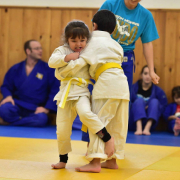 Judo for Kids
 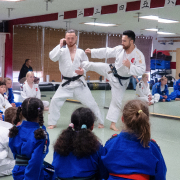 Karate for Kids
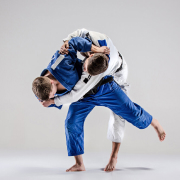 Judo
Judo 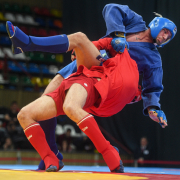 Combat Sambo
  Jiu-Jitsu
  Muay Thai & Kickboxing
 Black Belt Club
  Martial Arts Birthday Party
  After School Program
  Tina Takahashi
  Sean MacFadyen
  Adam MacFadyen
  Torin MacFadyen
  Liam MacFadyen
  Events
  Blog
Blog  Gallery

 87
87