For many urban professionals and adults living in today’s fast-paced, digitally driven world, maintaining peak physical fitness can quickly become a monotonous, uninspiring chore. Countless hours spent jogging on stationary treadmills, navigating crowded commercial gym floors, or performing repetitive, isolated exercises on mechanical weight machines frequently lead to physical stagnation, mental boredom, and inevitable fitness burnout. Traditional workouts often treat the body as a mechanical machine separate from the mind, ignoring the vital human need for intellectual engagement, stress release, and meaningful skill acquisition.
But what if your physical conditioning could engage your intellect just as rigorously as your cardiovascular system? What if you could build functional, real-world muscular strength, develop explosive athletic agility, enhance your cardiovascular endurance, and master practical, battle-tested self-defense skills—all within a single, dynamic, supportive community environment? Welcome to the transformative world of adult Judo at Tina Takahashi Martial Arts, Ottawa’s premier school of martial arts mastery and character development.
Founded in Japan by the visionary educator and polymath Jigoro Kano in 1882, Judo translates literally from Japanese to English as “The Gentle Way”. However, prospective practitioners should never let the word “gentle” mislead them regarding the physical intensity and athletic demands of the art. As an official Olympic sport since the 1964 Tokyo Games, Judo has earned a stellar, worldwide reputation as one of the most well-rounded, physically demanding, and athletically comprehensive martial arts ever devised. It is a discipline that systematically utilizes every major muscle group in the human body while simultaneously taxing and expanding all physical energy systems.
Our specialized Judo classes for teens and adults are meticulously designed to build unshakable inner self-confidence while dramatically enhancing your personal safety, physical vitality, mental fortitude, and emotional resilience. Whether you are an experienced fitness enthusiast seeking a high-intensity, intellectually stimulating alternative to conventional gyms, or a complete newcomer stepping onto the mats for the very first time on a structured path to wellness, the tatami (traditional training mat) offers an unparalleled, full-body transformation.
To fully appreciate why Judo serves as such a profoundly effective workout for adult bodies, one must first understand its core biomechanical and philosophical foundations. In the Japanese language, the kanji character Ju (柔) signifies gentleness, suppleness, flexibility, or the tactical act of yielding. The character Do (道) translates to a way, a path, a journey, or a lifelong doctrine of self-cultivation. When combined, Judo represents a comprehensive martial lifestyle based on the intelligent application of physical laws rather than brute aggression.
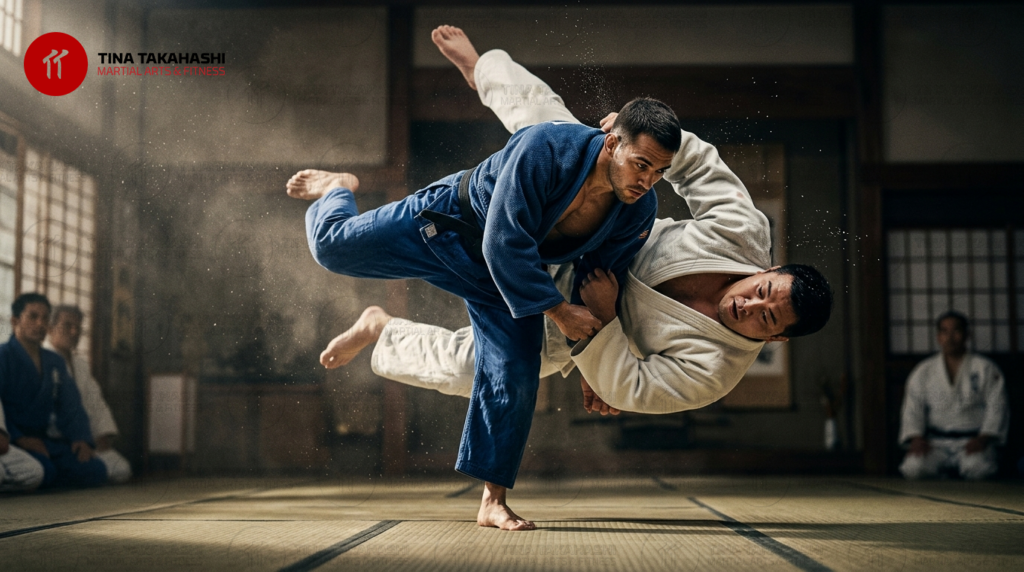
Unlike linear striking arts such as boxing or karate, which often rely on colliding kinetic force against opposing kinetic force, Judo emphasizes dynamic throwing techniques (Nage-Waza) and intricate ground grappling (Ne-Waza) utilizing hold-downs (pins), joint locks, and chokes rather than striking. It is fundamentally a full-contact, high-velocity sport that relies heavily on the laws of physics—specifically leverage, momentum, timing, and center-of-gravity manipulation. Instead of relying on superior muscular strength to overpower a larger or stronger opponent, a Judoka (Judo practitioner) is trained to redirect their partner’s incoming mechanical energy and use their own momentum against them.
The mechanical genius of a Judo takedown is divided into three distinct, sequential phases that demand precise bodily coordination and spatial awareness:
This sophisticated emphasis on maximum mechanical efficiency with minimum physical effort—a guiding principle established by Jigoro Kano known as Seiryoku Zenyo—makes Judo exceptionally accessible, scientifically sound, and safe for adults of all physical stature, ages, and fitness backgrounds. You do not need to be a powerlifter to master Judo; you simply need to understand body mechanics, timing, and leverage.
When you engage in a structured adult Judo class at Tina Takahashi Martial Arts, you are not simply burning calories; you are actively conditioning and reinforcing every functional, physiological system in your body. Unlike isolated gym machines that work single muscles in artificial, linear planes of motion, Judo demands continuous, multi-planar athletic movement. Here is an anatomical breakdown of how Judo training delivers a complete, full-body transformation:
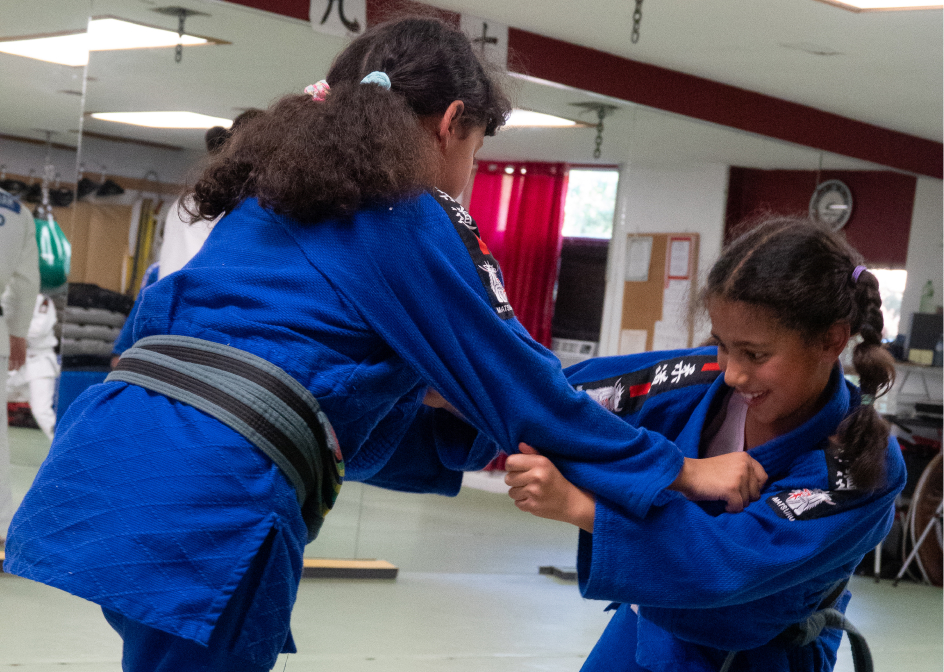
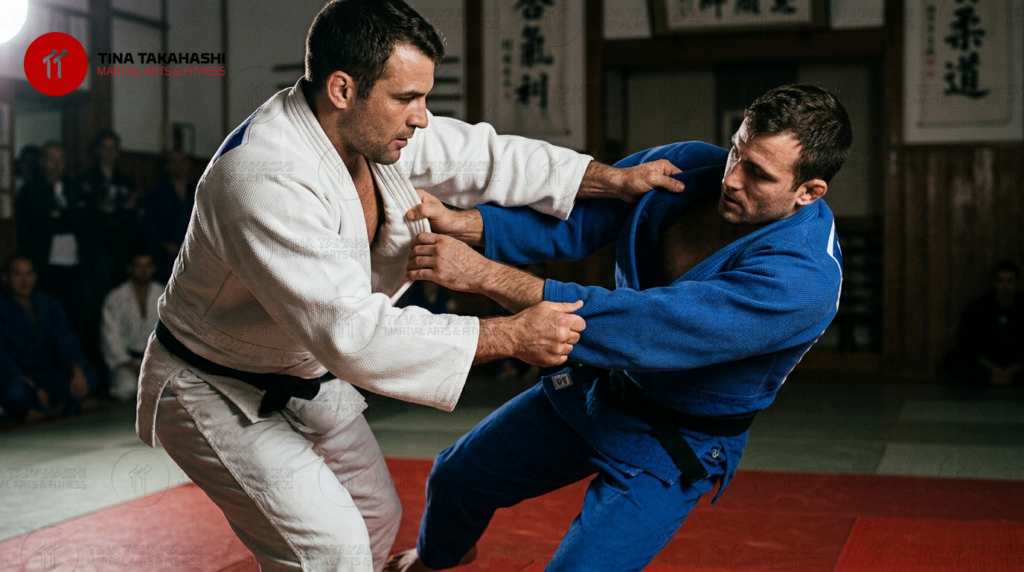
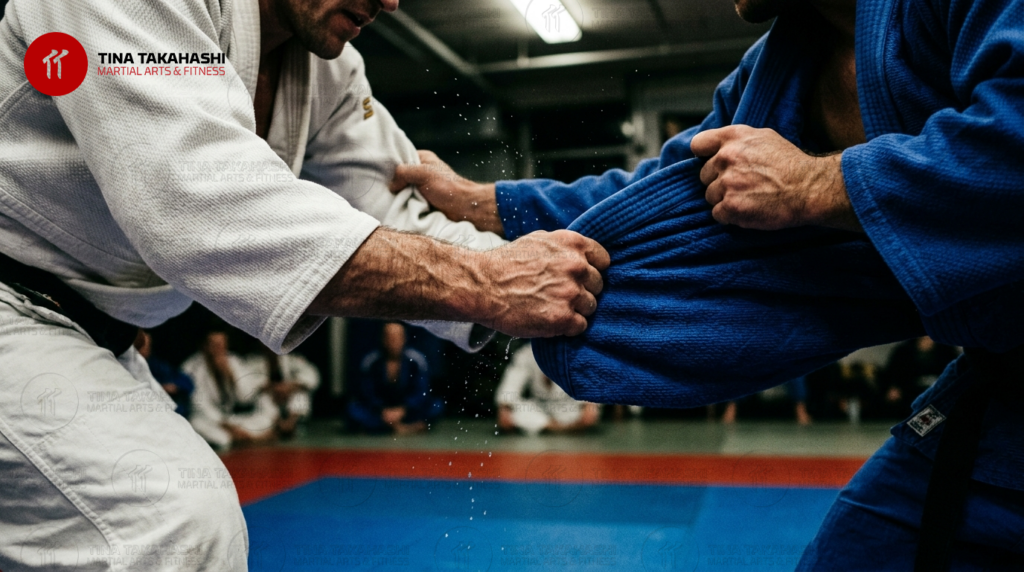
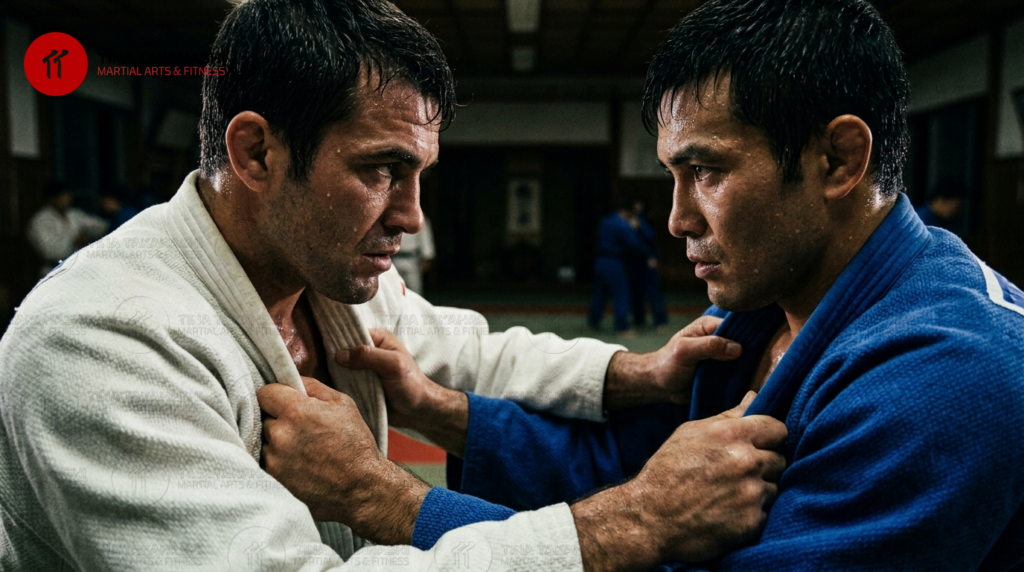
Every Judo exchange begins with Kumi-Kata—the tactical battle for superior grip control on your partner’s traditional woven cotton uniform (gi). From the exact moment your fingers grasp your partner’s lapel and sleeve, your hands, wrists, forearms, and brachioradialis muscles are engaged in intense, sustained isometric and dynamic contractions.
However, grip fighting is never an isolated forearm exercise. Pulling, lifting, steering, and off-balancing a resisting, live partner forces your entire upper-body kinetic chain into intense muscular synergy. Your latissimus dorsi, trapezius, rhomboids, rear deltoids, and pectoral muscles must contract forcefully to manipulate your opponent’s posture. This constant pulling and pushing builds immense functional upper-back thickness, postural alignment, and real-world gripping power that translates directly into daily physical tasks and athletic longevity.
In traditional sports science, the core is recognized as the anatomical bridge transferring mechanical power between the lower and upper body. In Judo, the core is the absolute epicenter of every throwing technique (Nage-Waza).
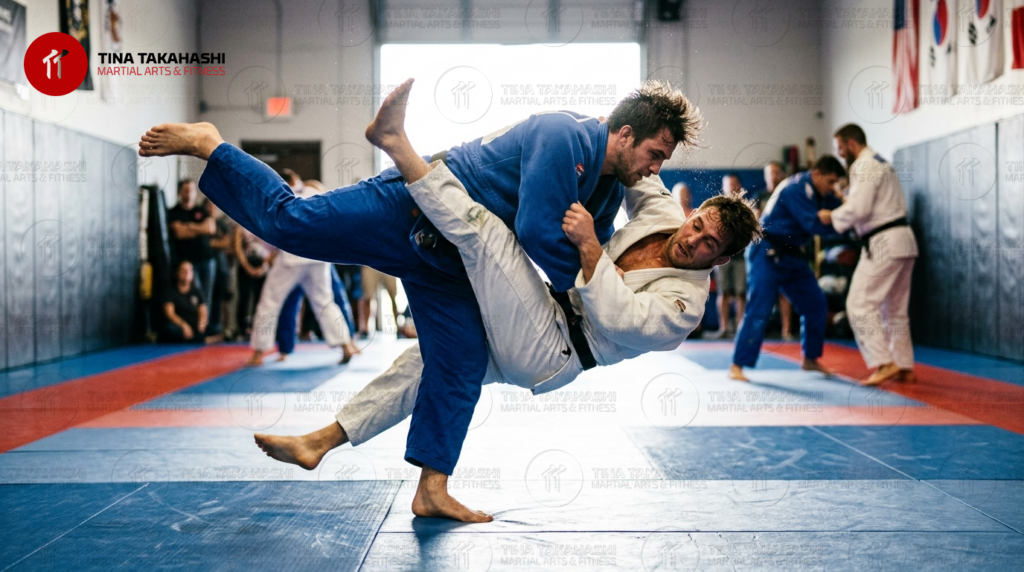
When executing classic hip throws such as O-Goshi or sweeping foot techniques like Osoto-Gari, a practitioner must generate explosive rotational torque. Twisting your torso under resistance requires intense, simultaneous activation of your internal and external obliques, transverse abdominis, rectus abdominis, and the erector spinae muscles along the lumbar spine. Stabilizing your own body while lifting a resisting partner builds deep, functional, three-dimensional core stability and spinal resilience that isolated floor crunches or static planks simply cannot replicate.
Judo training is a premier modality for metabolic conditioning because it seamlessly merges steady-state aerobic endurance with explosive, high-intensity anaerobic interval bursts. A standard training session involves continuous, rhythmic footwork and technical drilling (Uchi-Komi—repetitive fitting-in practice without completing the throw), which elevates the heart rate into the optimal aerobic fat-burning zone and enhances cardiovascular efficiency.
However, when class transitions to live sparring (Randori) or rapid takedown circuits, the metabolic demand instantly shifts to the anaerobic system. The physical exertion of executing rapid takedowns, resisting takedown attempts, and immediately transitioning to ground grappling (Ne-Waza) spikes cardiovascular demand, torches adipose body fat, dramatically improves VO2 max, and promotes rapid cardiovascular recovery. This interval-style training mirrors the physiological benefits of High-Intensity Interval Training (HIIT), but with the added cognitive benefit of learning elite self-defense.
True athletic functional fitness requires bodily control while moving through space. Executing precise Judo techniques requires fluid, responsive footwork known as Tsugi-Ashi (shuffling gait where the feet never cross) and Tai-Sabaki (rapid body turning and pivoting).
Navigating the mat against a moving partner demands rapid changes of direction, instantaneous weight transfer, and exceptional hip, knee, and ankle mobility. Regular practice naturally increases your functional range of motion, enhances spatial awareness (proprioception), refines bodily balance under external resistance, and lubricates major joints, reducing the stiffness often associated with sedentary adult work routines.
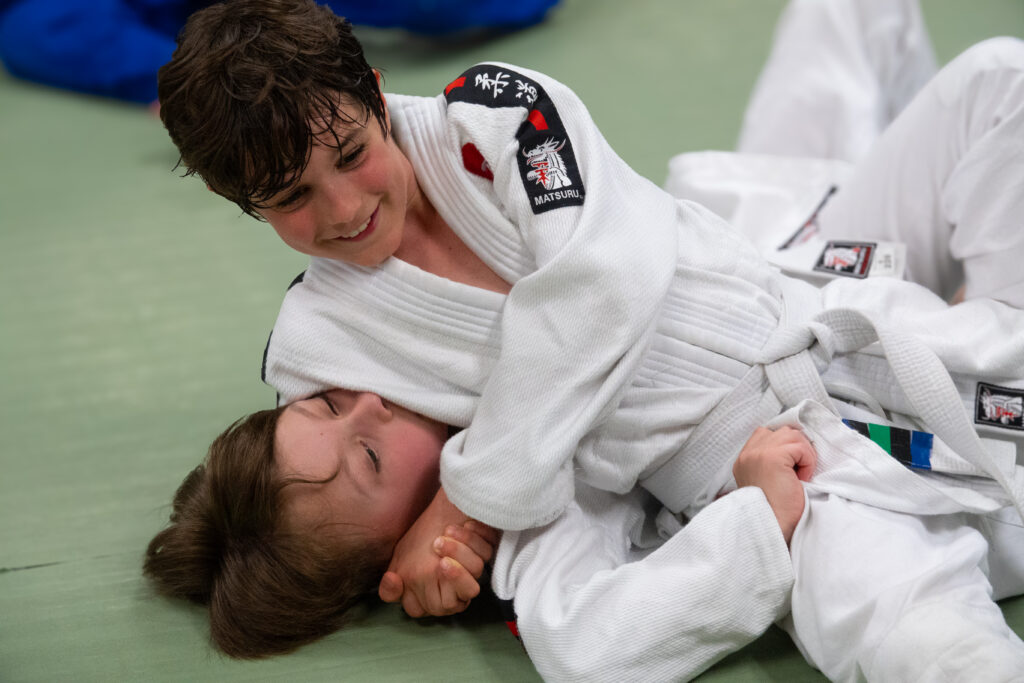
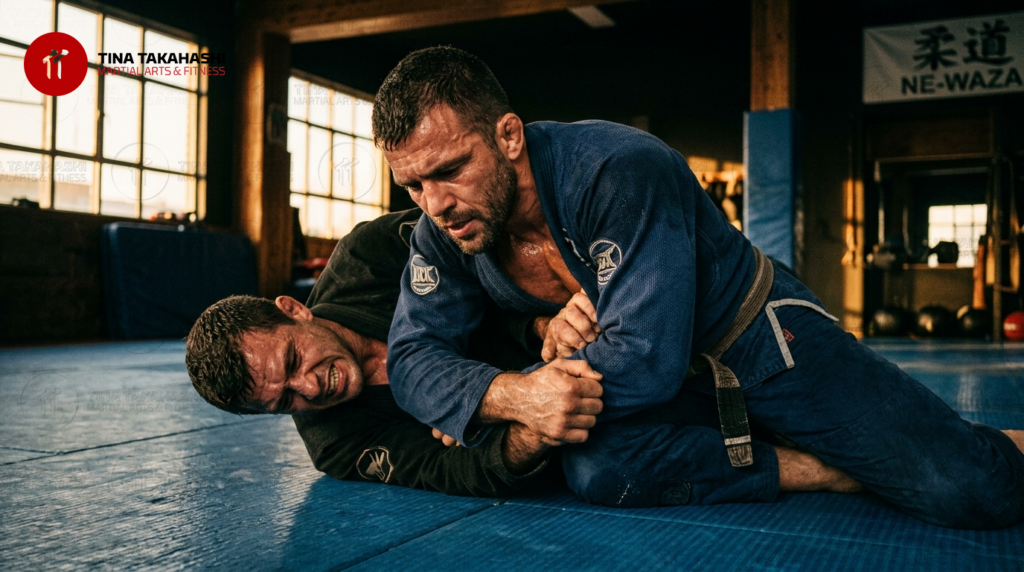
While Olympic Judo is world-renowned for its spectacular standing throws, 50% of the art takes place directly on the tatami through Ne-Waza (ground grappling techniques). Once a throw is executed, combat transitions seamlessly to the floor, where practitioners utilize positional control, hold-downs (Osaekomi-Waza), joint locks (Kansetsu-Waza), and submission chokes (Shime-Waza) to neutralize an opponent.
For adults seeking full-body conditioning without the trauma of concussive head strikes found in boxing or kickboxing, Ne-Waza is the ultimate physical training ground. Grappling on the mat requires intense, whole-body muscular endurance. Escape drills—such as hip escapes (Ebi or shrimp movements), bridging, and technical stand-ups—engage the glutes, hamstrings, hip flexors, and deep stabilizing muscles of the spine.
Wrestling for dominant position against a resisting partner forces your muscles to sustain isometric contractions under fatigue, building extraordinary physical stamina and mental tenacity. Because ground grappling takes place from knees, back, and seated positions, it provides an intense, low-impact workout that spares weight-bearing joints from repetitive concussive impact while delivering maximum muscular fatigue and cardiovascular conditioning.
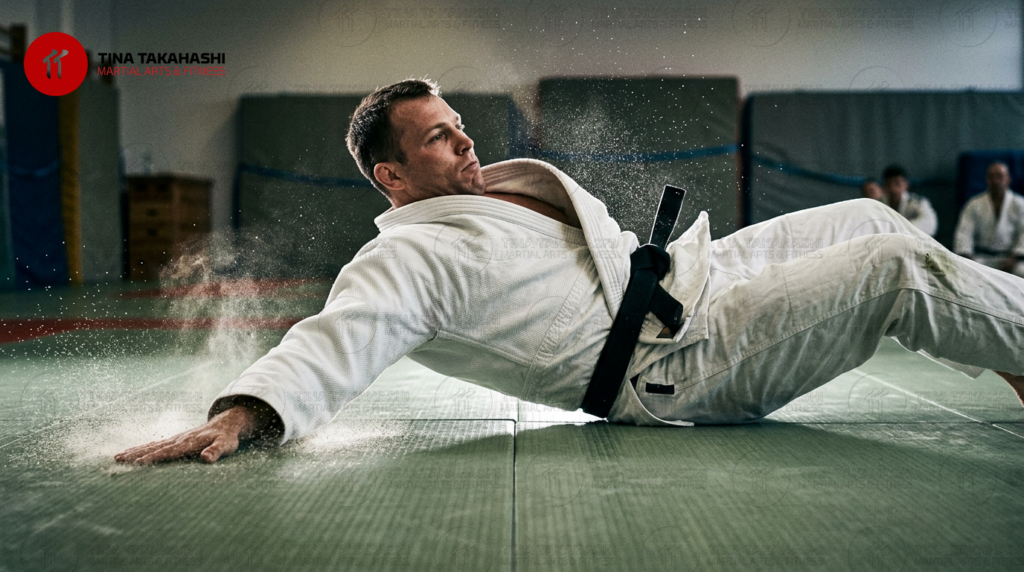
One of the most crucial, yet universally overlooked, components of martial arts training and personal self-defense is learning the precise science of falling safely—a discipline known in Japanese as Ukemi. In our adult Judo programs at Tina Takahashi Martial Arts, various directional breakfalls (forward roll, backward breakfall, side breakfall) are systematically taught, broken down step-by-step, and constantly reinforced for absolute student safety. Before you are ever permitted to throw a partner, you learn how to absorb impact efficiently, disperse kinetic energy safely across the tatami, and protect your head, cervical spine, collarbones, and limbs.
The biomechanical principles of Ukemi involve slapping the mat with the arm and palm at a precise 45-degree angle just before the torso makes contact. This action sends a shockwave into the resilient mat surface, dispersing the force of gravity and momentum across a broad surface area rather than allowing it to concentrate on delicate joints or bones. Furthermore, practitioners learn to tuck their chins tightly to their chests, preventing the skull from ever whiplashing into the ground.
For adult practitioners, Ukemi represents a highly practical, life-saving survival skill that extends far beyond the competitive boundaries of the dojo arena. In Canada’s National Capital Region, residents regularly navigate treacherous, icy sidewalks, snow-covered parking lots, and freezing rain during the harsh winter months. Accidental slips, trips, and falls are among the leading causes of chronic joint trauma, broken bones, and emergency room visits among adults.
When you train in Judo, falling safely becomes an instantaneous, ingrained neuromuscular reflex. If you experience an unexpected slip on an icy Ottawa pavement or trip over an unseen obstacle in everyday life, your body automatically lowers its center of gravity, rounds its structure, protects the head, and executes a breakfall without requiring conscious thought. Knowing instinctively how to protect yourself during a fall is an invaluable, real-world asset that preserves your long-term physical well-being and bodily autonomy. Furthermore, systematically overcoming the natural human fear of falling builds immense emotional security, psychological resilience, and deep-seated physical self-assurance.
In a contemporary era where statistical studies reveal that nearly 8 in 10 North Americans are afflicted by chronic, debilitating stress, mental health and proactive stress management have become just as vital to overall longevity as physical cardiovascular conditioning. Modern adults are bombarded by relentless digital notifications, professional dead-lines, financial pressures, and sedentary office environments that trap cortisol and nervous tension inside the physical body.
While mainstream fitness culture often attempts to treat stress through passive relaxation, traditional martial arts practice fundamentally offers an active practice of profound stillness, mental focus, and absolute internal control. When you step onto the tatami at Tina Takahashi Martial Arts, the outside world ceases to exist.
Judo is universally described by elite practitioners and coaches as “physical chess” played at high velocity. When you are engaged in live sparring (Randori) or practicing intricate biomechanical drills with a partner, your brain is 100% absorbed in solving real-time, three-dimensional physical puzzles.
You cannot think about tomorrow’s workplace presentation, answering emails, or personal anxieties when a live training partner is actively attempting to grip your lapel and break your balance. You must observe minute biomechanical details, anticipate your partner’s tactical reactions, read their shifts in weight, and execute explosive defensive or offensive movements with split-second precision.
This complete cognitive immersion forces you to leave workplace anxieties and daily mental fatigue at the dojo door. The intense physical exertion of Judo triggers a massive release of endorphins and neurochemicals, providing profound, lasting stress relief by literally purging stored physical tension and emotional anxiety from your nervous system. You leave each class physically exhausted, yet mentally invigorated, calm, and cognitively sharp.
A pervasive and unfortunate misconception among many adults is the intimidating belief that martial arts training is reserved exclusively for young children, hyper-athletic teenagers, or individuals who have been practicing continuously since early youth. Many adults assume that their age, current fitness level, or lack of prior athletic experience disqualifies them from learning a dynamic grappling art like Judo.
At Tina Takahashi Martial Arts, we have completely shattered this self-limiting myth. Our overarching school philosophy is clear and uncompromising: “OVERCOME MEDIOCRITY AND SELF LIMITS, GO BEYOND YOUR EXPECTATIONS TO BE YOUR VERY BEST!”. Our facility and adult curriculum are intentionally structured to craft an inclusive, progressive training system where any student with the willingness to try, learn, and persevere can become a highly proficient martial arts practitioner.
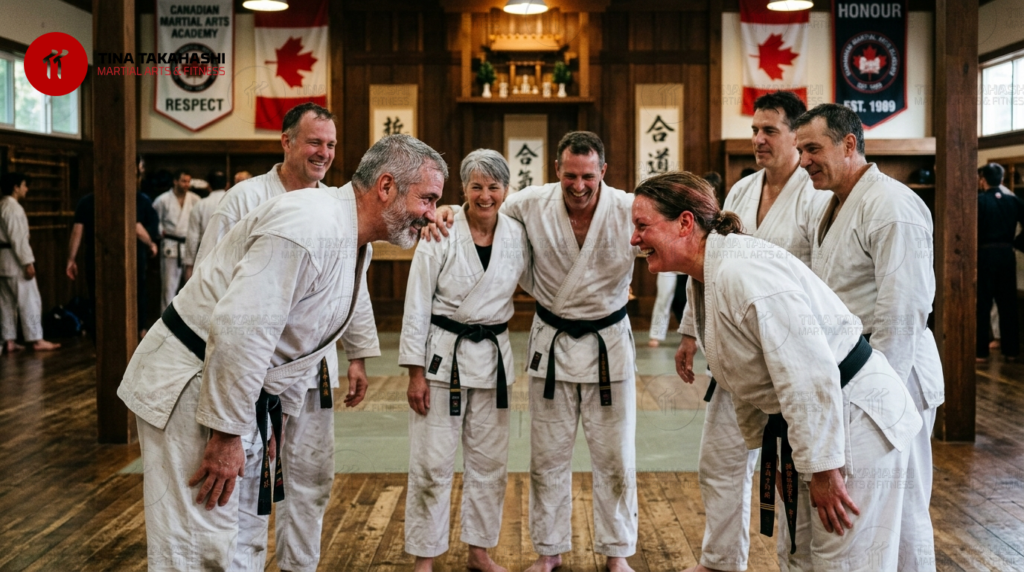
As highlighted in our numerous verified 5.0-star independent reviews, our family-oriented, deeply supportive atmosphere makes our Ottawa dojo an exceptional training home for anyone, regardless of their chronological age or starting physical capabilities. We do not throw adult beginners into chaotic, high-impact sparring on their first day. Instruction is systematic, highly detailed, and scaled to respect each individual’s physical limits while gently pushing them toward personal mastery.
Adult students frequently report remarkable personal transformations within our programs. In fact, many parents who enroll their children are so inspired by watching class that they decide to step onto the mats themselves—some returning to martial arts in their 40s, 50s, and beyond after a 15-year hiatus. They quickly discover that under proper, patient, world-class guidance, muscle memory awakens, joint flexibility returns, functional strength increases rapidly, and vitality is restored. Make no mistake; our dojo is a place where mature adults train with mutual respect, taking care of their partners’ bodies as carefully as their own.
What truly sets Tina Takahashi Martial Arts apart from any other training facility, commercial fitness center, or martial arts club in Ottawa is the unparalleled expertise, rich historical roots, and elite championship legacy of our leadership team. Our school is built upon the powerful, prestigious foundation laid by Master Masao Takahashi, an 8th Degree Black Belt and former NATO Combat Instructor who opened his very first Canadian dojo at Uplands Air Force Base in Ottawa in 1965.
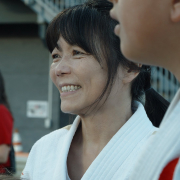
Today, this elite, world-renowned martial arts legacy is actively led and expanded by Master Tina Takahashi—a true, celebrated pioneer in international women’s martial arts. Master Takahashi is a World Sambo Champion, a former Olympic Coach, an inducted member of the Ottawa Sports Hall of Fame, and certified by Judo Canada the national sport governing body of judo in Canada.
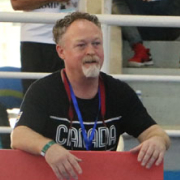
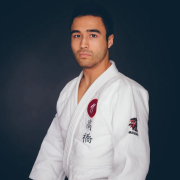
She is joined on the mats by her husband, Master Sean MacFadyen, a 6th-Degree Black Belt with over 40 years of dedicated training who currently serves as Canada’s national coach for Sport & Combat Sambo. Together with their champion sons—including elite practitioners like Liam MacFadyen, Torin MacFadyen and Adam MacFadyen – they represent one of North America’s premier martial arts dynasties.
We have been proudly serving community members across Canada’s National Capital Region—including Ottawa, Gatineau, Hull, Aylmer, and the Upper Valley—for over four decades. When you step onto our tatami at 1061 Merivale Road, you have the incredibly rare and unique opportunity to be taught, mentored, and corrected directly by world-class champions and national team coaches.
Yet, despite this elite international pedigree, the atmosphere within our dojo remains deeply nurturing, accessible, and welcoming. As our students testify, make no mistake: this is not just a commercial gym where you are a faceless number scanning a membership card. It is a true school—a dedicated sanctuary designed to elevate your physical, mental, and emotional state. Our instructors take their craft very seriously; if you step onto our mats willing to give your 100% effort and commitment, our leadership team will give you 100% of theirs.
Are you ready to break free from monotonous, uninspiring workout routines that fail to challenge your mind? Are you ready to build dynamic, functional full-body strength, enhance your cardiovascular vitality, release chronic daily stress, and empower yourself with practical, real-world self-defense skills that will protect you for a lifetime?
Judo offers an inspiring, intellectually engaging, and highly effective path to achieving your highest personal health, fitness, and character goals. You do not need to be in shape to begin; training in Judo is precisely what will get you into the best physical and mental shape of your life.
We invite you to visit our premier facility located at 1061 Merivale Road in Ottawa, Ontario. Whether your personal goal is daily stress reduction, athletic conditioning, learning how to fall safely on icy streets, or embarking on the journey toward earning your black belt, our doors are open, our instructors are waiting, and our mats are ready for you.
Take advantage of our exclusive introductory opportunity: Special Online Offer — 2 Weeks of Training for Only $77. Experience the transformative power of “The Gentle Way” and discover what it truly means to master your body and mind. Join our Ottawa community and unleash your full potential today!






 The Secret to Better Grades? Why Focus on the Tatami Translates to the Classroom
The Ultimate Hybrid: Why Combat Sambo is the Closest Thing to Real Street Defense
Mastering the Throw: The Hidden Biomechanics of Olympic Judo
Bully-Proofing Your Kid: Building Unshakeable Confidence Through Martial Arts
The Secret to Better Grades? Why Focus on the Tatami Translates to the Classroom
The Ultimate Hybrid: Why Combat Sambo is the Closest Thing to Real Street Defense
Mastering the Throw: The Hidden Biomechanics of Olympic Judo
Bully-Proofing Your Kid: Building Unshakeable Confidence Through Martial Arts


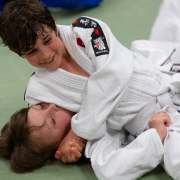 Martial Arts For Kids
 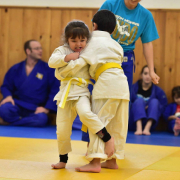 Judo for Kids
 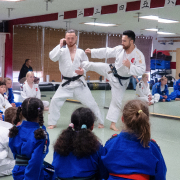 Karate for Kids
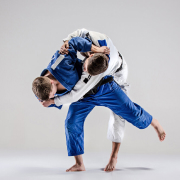 Judo
Judo 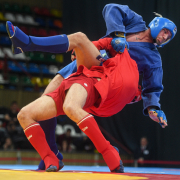 Combat Sambo
 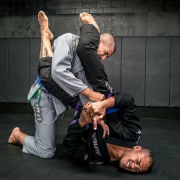 Jiu-Jitsu
 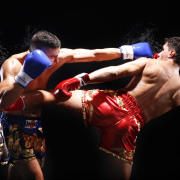 Muay Thai & Kickboxing
 Black Belt Club
  Martial Arts Birthday Party
  After School Program
  Tina Takahashi
  Sean MacFadyen
  Adam MacFadyen
  Torin MacFadyen
  Liam MacFadyen
  Events
  Blog
Blog  Gallery

 34
34